
A Durban brief for heat, movement and polish
The brief came from a private client in Durban who needed a suit for summer events near the coast, where humidity and warm afternoons can make heavier cloth uncomfortable very quickly. He wanted something smart enough for a wedding and formal dinners, but still easy to wear in open air venues and during travel between locations. The look had to stay refined, but not stiff or dark.
We started with the usual questions around venue, time of day, shade and how long the suit would be worn. In Durban, that matters. Sun, salt air and changing temperatures can all affect how a suit feels by mid afternoon, so we planned for light weight comfort first and formal finish second. The final brief was simple enough on paper, but it needed careful cloth choice and a good fit around the shoulder and chest.
Cloth choice and build details that suit the coast
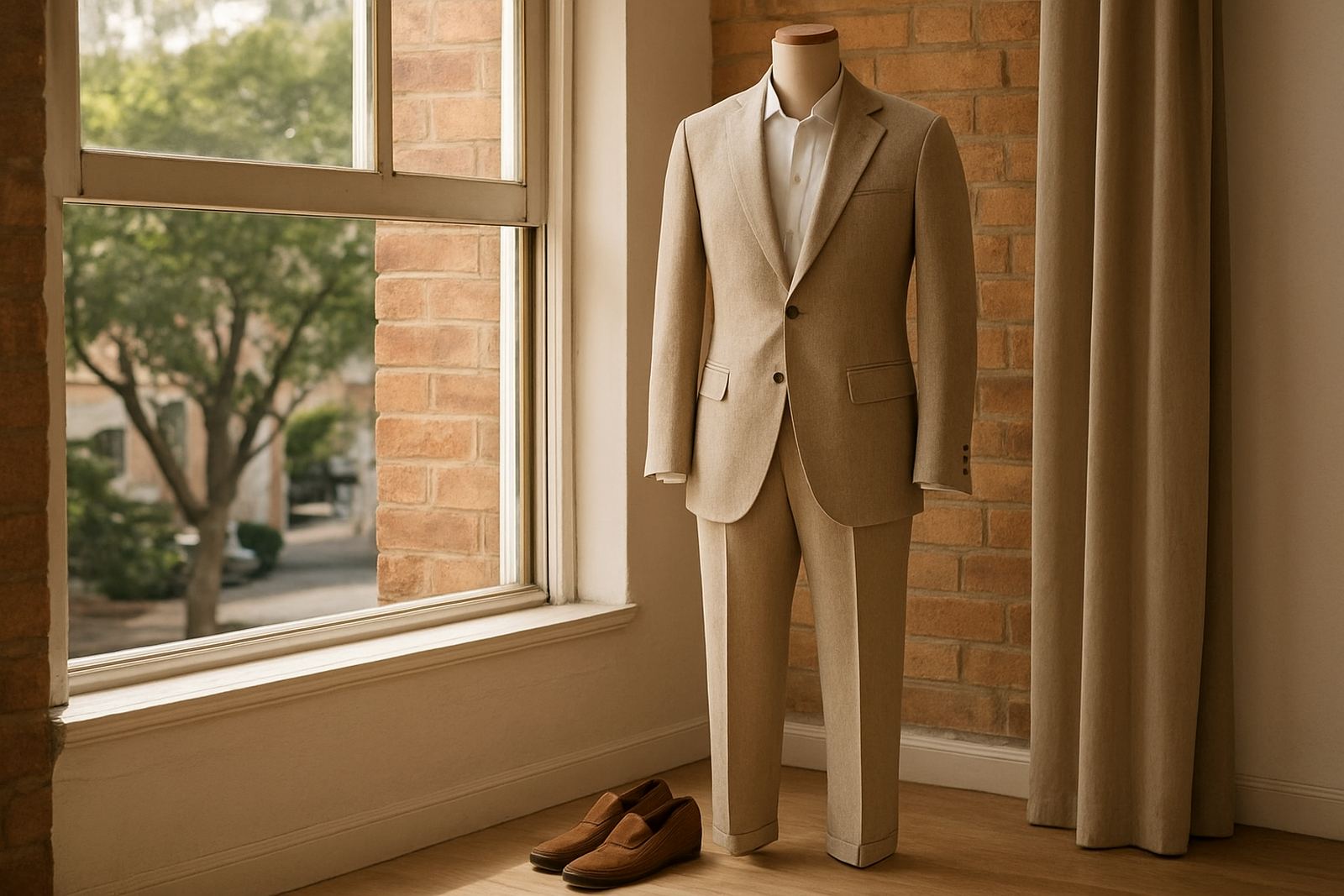
For this commission we supplied a light-coloured suit in a breathable cloth selected for warm weather wear. The jacket was cut to allow airflow without looking boxy, and the trousers were shaped for movement while still keeping a neat front break. We kept the lining light and reduced bulk where possible so the suit could be worn comfortably for several hours at a time.
- Two-piece made-to-measure suit
- Light seasonal cloth for warm weather
- Jacket with softer structure and clean lapel roll
- Trousers cut for ease at the thigh and seat
- Light internal finish to help with heat and humidity
- Fine adjustment at sleeve length and jacket balance
The colour was chosen to work in daylight and photograph well outdoors. It also gave the client a brighter, more relaxed look without losing formality. That balance is not always easy to get right, especially for coastal events where black and navy can feel heavy very quickly.
Online fitting, studio checks and the fit refinements
The client used our online fitting process first, then came in for studio measurement confirmation before production. This is often the safest route for made-to-measure work because it lets us compare the digital fitting notes with real body posture, shoulder slope and stance. A small difference in posture can change how a jacket hangs, so we always check those details before cutting.
During the fitting review we refined the jacket length, adjusted the trouser rise and softened the chest shape slightly so the suit would sit naturally rather than tightly. We also checked collar position and sleeve pitch, which are easy to overlook but make a clear difference once the jacket is buttoned. The client wanted room to move and sit comfortably, but still look tailored, not oversized.
- Online fitting review completed first
- Studio measurement confirmation in Rosebank
- Shoulder and sleeve balance adjusted
- Trouser comfort refined for sitting and walking
- Final fitting checked under shirt and shoes the client planned to wear
Timeline from first notes to final handover
The project ran over four weeks from initial enquiry to handover. Week one covered the style brief, measurements and cloth selection. Week two was pattern drafting and cutting. Week three covered sewing, pressing and the first fitting review. Week four was finishing, final pressing and courier coordination for the Durban delivery.
That timeframe worked well because the client had a firm event date and we had enough space to make small refinements without rushing the finish. Load-shedding planning also mattered during production, since pressing and machine work need a steady schedule. We build around that reality every week, so the garment does not end up delayed by avoidable stoppages.
What the finished suit changed on the day
The result was a light, comfortable suit that still looked composed in heat and sun. The client reported that it wore well through a long Durban day, with enough airflow to stay comfortable and enough structure to keep the silhouette neat in photos and during formal moments. The jacket held its line and the trousers stayed clean through sitting, standing and moving between venues.
What mattered most was that the suit did not feel like a compromise. It looked seasonal, but not flimsy. It felt relaxed, but still clearly tailored. That is usually the target with summer suiting, and in this case the fit worked out as intended. The client also liked that the colour read well in daylight and at sunset, which gave the outfit extra range across the full event.
- Comfortable for warm coastal weather
- Smart enough for formal photos and speeches
- Better movement through the shoulder and seat
- Clean look in daylight and late afternoon light
What we would repeat for another Durban commission
If we were making the same type of suit again, we would keep the same basic approach: light cloth, reduced internal weight, and a careful review of posture before cutting. For Durban clients, we would also keep a close eye on trouser length and jacket balance, because coastal wear often needs a slightly more relaxed comfort margin than winter suiting in Johannesburg or Pretoria.
We would also recommend a second shirt fitting alongside the suit, especially if the client expects a long day outdoors. A breathable shirt collar and the correct sleeve tension make the whole outfit work better. For future commissions like this, we would keep the same four week lead time and schedule the final fitting close enough to the event date to allow for small tweaks but not so late that courier timing becomes tight, or risky.
Key facts
| Project type | Made-to-measure summer suit |
|---|---|
| Client location | Durban, KwaZulu-Natal |
| Timeline | 4 weeks from brief to handover |
| Fit method | Online fitting plus studio confirmation |
| Suit build | Two-piece with light internal finish |
| Best suited for | Warm coastal weddings, formal events and daytime functions |