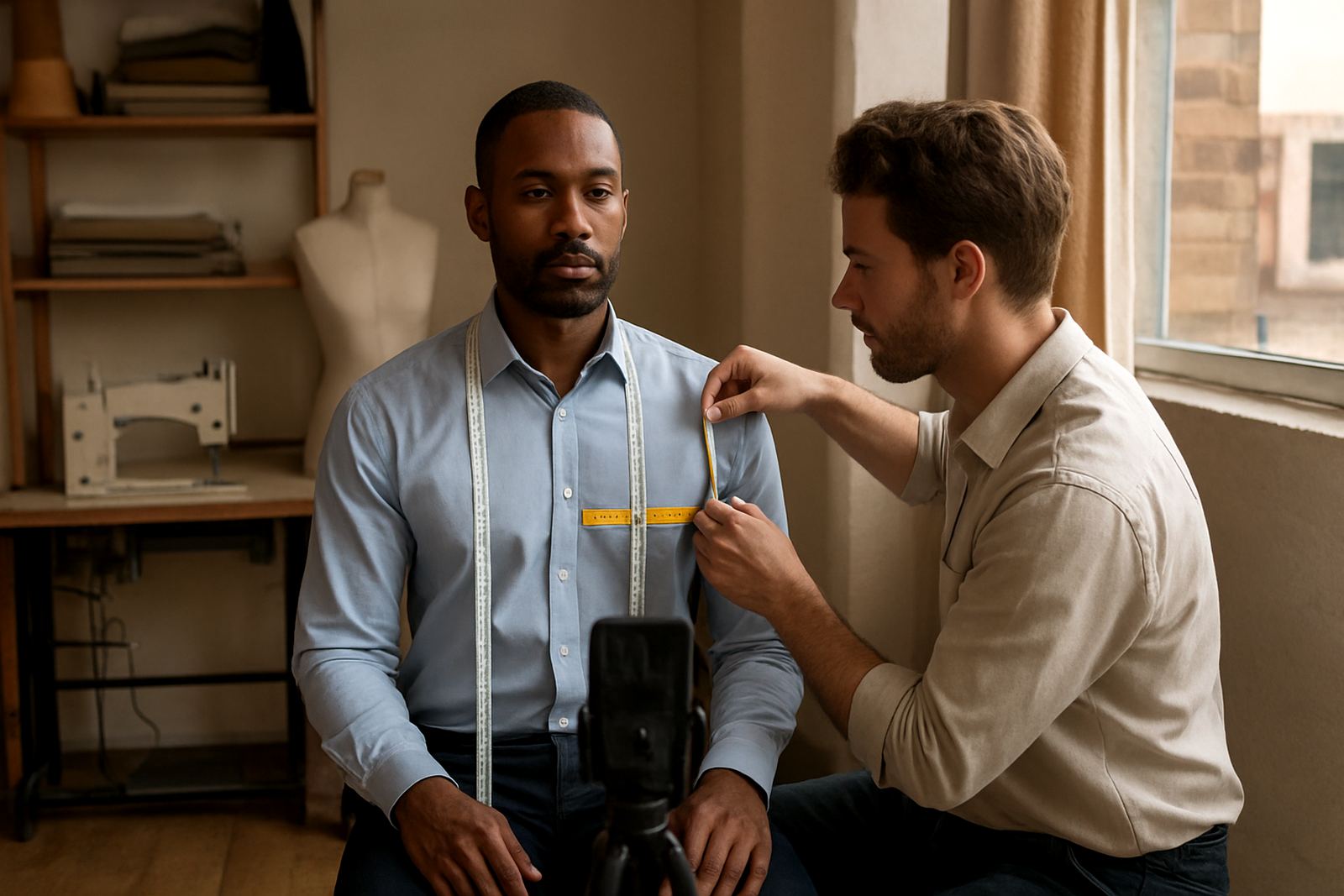
Start With a Calm Space and Good Lighting
Before your fitting begins, choose a quiet room with enough space to stand naturally and move your arms. A tiled bedroom, spare room or a clear section of the lounge works well. If you are in Johannesburg and load-shedding is due, set up while there is still daylight so you are not trying to judge the tape in dim light.
Good lighting matters more than people think. You need to see the tape line against the body and check that it sits level all the way around. Natural light is best. If that is not possible, switch on two lights from different sides of the room so shadows do not hide the tape edge.
- Stand on a flat floor, not thick carpet or a sloped patio.
- Use a full-length mirror if you have one.
- Keep your phone steady on a table or chair, not in your hand.
- Wear fitted clothes or light underwear so the measurements are not distorted.
What to Have Ready Before the Call Begins
The fitting goes quicker when everything is within reach. Have a soft measuring tape, a notepad, a pen, and a helper if possible. A second person makes it easier to keep the tape straight at the back and to read measurements without twisting your body. If you are alone, use the mirror and take your time.
Keep the garments you already wear most often nearby. A favourite shirt or suit jacket gives useful context for fit preferences, especially if you know where the shoulders pull or where the waist feels too tight. For wedding tailoring or corporate orders, it also helps to have the shoes you plan to wear, because hem length and trouser break can change slightly depending on heel height.
- Soft measuring tape
- Notebook and pen
- Phone charger or power bank
- Plain fitted shirt or vest
- Current shirt, jacket or suit for comparison
Measure the Same Way Every Time
Consistency is the main reason remote fittings work. Take each measurement the same way, with the tape snug but not tight. It should lie flat against the body without digging in. A tight tape can add pressure and create a smaller number than you really need, while a loose tape can do the opposite. The aim is comfort with structure.
For shirts, focus on collar, chest, waist, sleeve length and shoulder width. For suits, add jacket length, trouser waist, seat, rise and inside leg. If you are between sizes or prefer a slimmer profile, say so during the fitting. A relaxed everyday fit and a sharper work fit are not measured the same way, even if the numbers look close.
- Do not hold your breath while measuring the chest or waist.
- Keep your arms relaxed at your sides.
- Check that the tape is level at the back and front.
- Take each key measurement twice if you are unsure.
Use Your Body Shape, Not Just the Tape Number
Numbers are only part of the picture. A client with broad shoulders, a fuller stomach or a shorter torso may need different balance in the pattern even if the chest measurement seems standard. That is why a fitting conversation matters. If jackets pull across the back, if shirts ride up when you sit, or if trousers slip down during the day, say it clearly.
In Rosebank and Sandton we often see clients who need clothing for long office days, client meetings and evening functions in the same week. In that case, the fit has to work when standing, sitting and moving through a full day. A good fitting should capture those details, not just your static shape in front of the mirror.
Be sure to mention any shoulder slope, posture habit or side that is slightly stronger than the other. Small differences can change how a sleeve hangs or how a jacket collar sits. If the shirt is for coastal travel, note that humidity in Durban or Cape Town can make a closer fit feel different from what you wear inland.
Show the Fit Consultant What You Really Wear
During an online fitting, let the consultant see the way your current clothing behaves on your body. Lift your arms, sit down, turn sideways and walk a few steps. This shows whether the shirt pulls at the back, whether the jacket bunches at the button, or whether the trouser seat needs more room. Those movements tell us more than a still pose ever could.
If you already have garments you like, hold them up to the camera and explain what works. Maybe you prefer a longer shirt tail for business wear, or maybe you want a cleaner waist on a suit for a wedding. The more practical the feedback, the better the pattern can be adjusted.
- Turn side on for shoulder and waist checks.
- Sit for trouser and jacket comfort checks.
- Raise both arms to test shirt and jacket movement.
- Show any old garment that fits the way you want.
Common Remote Fitting Mistakes to Avoid
Most errors are simple and easy to prevent. The biggest one is rushing. Another is measuring over thick clothing because it feels easier. That extra layer can add enough bulk to affect the final fit. A third mistake is guessing instead of checking. If one number looks odd, measure again before moving on.
It is also worth avoiding fittings when you are tired after work or in a hurry between school runs and traffic. Your posture changes when you are rushed and the numbers can shift. For clients in Pretoria, Midrand or Randburg, it may be better to do the fitting in the morning when the body is more settled and the house is quieter. That small bit of planning can save time later.
Finally, keep your notes somewhere safe. If you place repeat orders later in the year, those measurements and fit comments help keep the result consistent. Good tailoring is easier when there is a proper record of what worked the last time.
A Simple Rosebank Example That Shows the Difference
A client from Rosebank once needed two shirts for work and a suit for a family event. He tried measuring quickly at home after a long commute and the chest looked fine, but the shoulder line was off because he had not stood naturally. We asked him to repeat the fitting in daylight, this time with a helper, and the second set of measurements gave a cleaner result. The shirt sat better at the neck and the suit jacket no longer pulled across the back when he sat down.
That kind of result is typical when the fitting is handled with care. You do not need complicated equipment, just a steady setup and a few minutes of attention. If you are fitting from home in Durban, Cape Town or anywhere else in South Africa, the same principle applies. Calm space, clear light and honest feedback usually lead to a much better garment.
When in doubt, say what feels wrong rather than trying to fix it yourself. A small adjustment now is easier than a major correction later. That is the real value of a good remote fitting. It gives the cutter the details needed to make the garment work properly from the start.