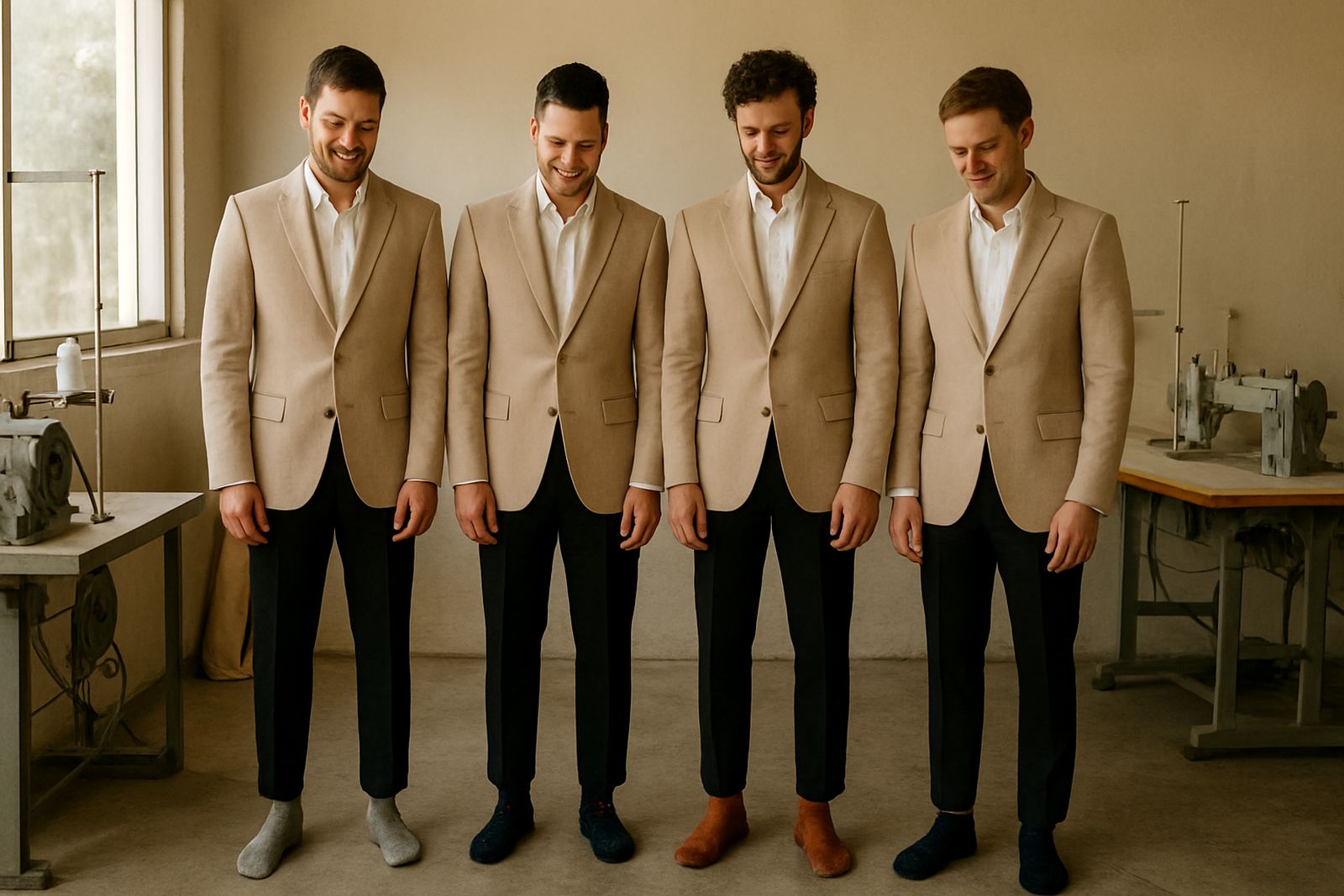

When standard sizing starts fighting the body
Many men with broader chests, stronger upper arms, fuller stomachs or a heavier seat know the same pattern: a shirt that fits the neck but pulls at the buttons, or trousers that fit the waist and then sag everywhere else. In a suit, the jacket may close but the lapel sits badly, the back pulls across the shoulder blades, and the sleeves run short once the chest is accommodated. That is where bigger-build tailoring earns its keep.
We cut for shape, not just size. That means the garment is planned around posture, movement and the way weight is carried. A client from Midrand may need more room through the midsection with a shorter jacket length. A Pretoria client may need a stronger shoulder line and more sleeve head, while a Durban client may want lighter cloth and a little more ease because of humidity and warmer days. The point is simple: the fit must work in real life, not only when standing still.
Because we work from online fittings and studio fittings, we can handle larger proportions without forcing a standard block on the body. It saves time, avoids second rounds of adjustment and gives a cleaner finish from the start. For repeat orders, we keep the fit notes on file so the next shirt or suit starts from what already works, not from guesswork.
The measurements that matter most for fuller proportions
Bigger builds need more than chest and waist numbers. The pattern has to account for how those measurements relate to each other. A man may have a 50 inch chest and a 44 inch waist, or a broad back with a narrower front. Some carry more volume through the stomach after lunch, others through the lower back, and some need extra sleeve width because of the upper arm. Each of these changes the cut.
- Neck and collar comfort so shirts button properly without pinching.
- Chest and back balance so jackets close without pulling across the front.
- Waist and seat room so trousers do not grip when sitting in traffic or at work.
- Bicep and forearm allowance for sleeves that move without strain.
- Jacket length and rise so the proportions stay neat, not boxy.
For shirts, we often look at collar spread, shoulder slope, chest room and sleeve circumference. For suits, we check the jacket stance, button position, trouser rise and the relationship between waist and hip. Small changes matter a lot here. Add 2 cm in the wrong place and the jacket can look tired. Move that ease to the right panel and the whole piece sits better.
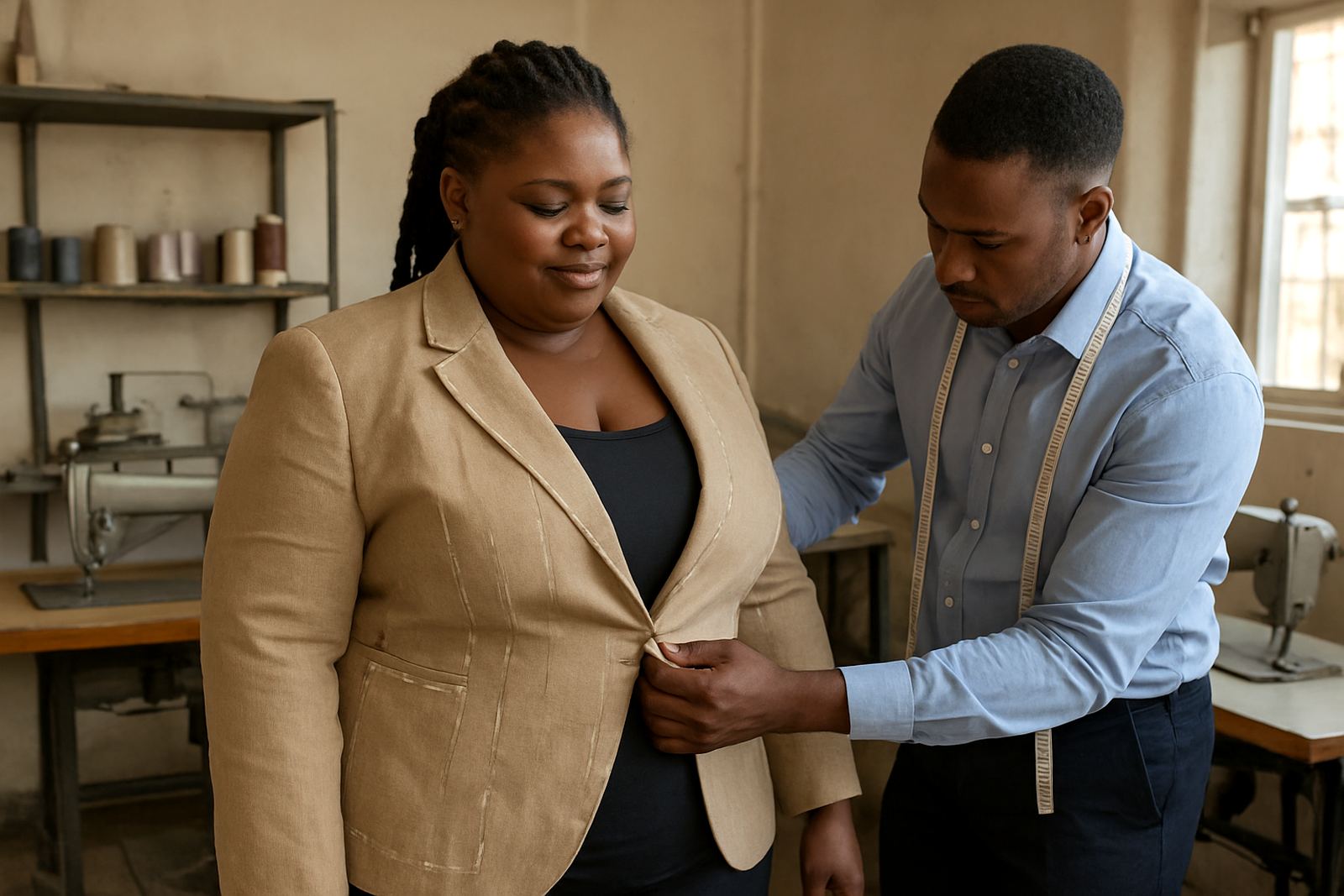
Our fitting process is practical. We ask how the garment will be worn, how much sitting, driving or moving the client does, and whether the fit must work under a waistcoat or on its own. That gives us the right starting point for the pattern and the finishing details.
How we plan shirts and suits so they hang properly
Good planning for bigger builds begins before cutting. For shirts, we choose a cloth weight that drapes well without clinging. In Johannesburg winters and cooler Pretoria mornings, a slightly fuller cotton weave can hold its shape nicely. In coastal areas like Durban and Cape Town, breathable fabric becomes more important because thicker cloth can feel heavy and warm. The goal is balance: enough structure for a clean line, enough comfort for long wear.
For suits, we look at jacket construction, trouser cut and lapel proportions together. A fuller build often benefits from a slightly longer jacket body, a careful shoulder line and a trouser rise that supports the waist rather than fighting it. On some bodies the best result is a single-breasted suit with a cleaner front, while on others a stronger lapel width helps keep the chest in proportion. There is no one formula.
- Shirts: collar fit, back width, armhole height and sleeve ease.
- Suits: jacket balance, button point, trouser rise and seat allowance.
- Finishing: hem length, cuff width, shoulder shaping and lining choice.
We also think about load shedding and daily wear. A suit should not crease badly after a long day in a car or office chair, and a shirt should still look decent after a commute across Gauteng. That is why finishing and fabric choice are just as important as the measurement sheet.
Common mistakes that make bigger sizes look bigger
The biggest mistake is assuming extra room means more cloth everywhere. Too much ease can make a bigger body look broader than it is and the garment starts to hang in the wrong places. Another error is over-tightening the waist in an attempt to look sharper. That usually causes button strain, pulling at the hips and creases across the front. The fit ends up looking tense rather than neat.
We also see trouble when sleeve and jacket lengths are ignored. On fuller builds, a jacket that is too short can make the torso appear wider, while trousers that sit too low create a slouchy line through the seat. Even small issues like a collar that sits away from the neck can spoil the whole shirt. It is these details that separate a useful garment from one that just about fits.
Another common mistake is choosing fabric only by pattern or colour. A bold check can work on a bigger frame, but if the scale is too small it can make the garment busy. Likewise, very light cloth may show every fold. We guide clients toward options that suit the body and the setting, whether the order is for office wear, a wedding, or a corporate wardrobe update.
One more thing: if the client has lost or gained weight recently, we recommend waiting until the body has settled a bit before final cutting. A shirt or suit made too early may need unnecessary alteration refinement later.
Budget ranges for bigger-build tailoring in Rand
Pricing depends on cloth, pattern complexity and how much customisation is needed. Bigger-build work may require extra fabric and more time in the pattern stage, so it is worth budgeting properly from the start. For most clients, a made-to-measure shirt in a fuller cut will typically start from around R1 250 to R2 100, depending on fabric and finish. A made-to-measure suit usually starts from around R5 800 and can move higher for premium cloth, special lining or a more detailed cut.
For wedding tailoring, where the look has to be precise and the fit must hold through photos, travel and a long day, budgets often sit between R6 500 and R12 500 or more. Corporate orders can be priced per piece or in batches, which is useful for businesses that need a consistent look across different body shapes. Alteration refinement for existing garments is usually more affordable, but it works best when the original piece has enough seam allowance to adjust properly.
- Shirt orders: budget for at least R1 250 per shirt.
- Suit orders: budget from around R5 800 per suit.
- Wedding looks: allow from R6 500 upward.
- Repeat orders: usually quicker and more cost-effective once the fit is saved.
If you are working to a budget, we can help prioritise the garments that matter most first. For many clients, starting with one well-cut shirt and one suit is the smartest move. It gives a clear baseline and makes future orders easier to plan.
What to expect from your first fitting
Your first fitting is about gathering the right shape information and understanding how the clothing will be worn. If you come to the Rosebank Studio, we can work through the garment on the body and note where extra room, tapering or length changes are needed. For online fitting, we guide you through the process step by step, then confirm the measurements before cutting begins. Either way, the aim is a clean result without unnecessary rounds of adjustment.
The team handling bigger-build work includes Sibusiso Mthembu, Nosipho Kekana, Daniel van Wyk, Phenyo Motsepe, Sharona Sewpersad, Mxolisi Kgosana and Snethemba Masemola. Each part of the process matters, from the first style discussion to fabric selection and final finishing. That makes it easier to manage shape, weight and balance properly, especially for clients ordering from Sandton, Randburg, Pretoria, Durban or Cape Town.
If your current clothes feel tight in one place and loose in another, that is usually a pattern issue rather than a size issue. We plan around the body as it is, not as a chart says it should be. That small shift makes a big difference.