
The brief from a busy Sandton schedule
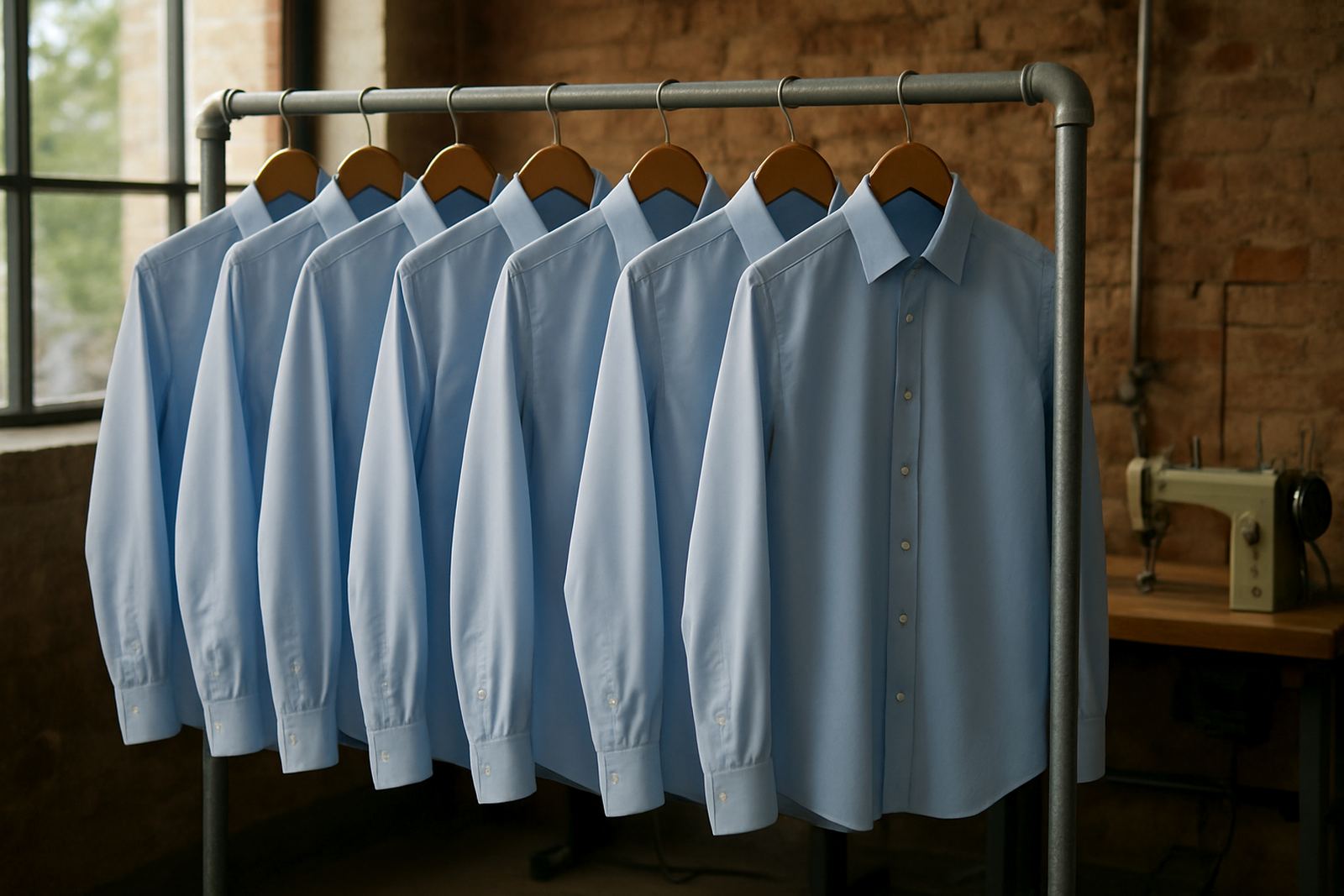
The client came to us from Sandton with a practical request, not a fashion one. He needed a set of business shirts that worked across long office days, late client dinners and travel into the city, with enough consistency that he could reach for any shirt in the week and know it would sit the same on the shoulders, chest and collar. He wanted a neat, professional line under a suit jacket, but without the tightness that often shows up after a few hours at a boardroom table.
Because the shirts were for repeated weekly use, the brief also covered comfort in Johannesburg heat, easy laundering and fabric that would not look tired after a few washes. The client was open to a few style variations, but the core ask was control: same fit, same finish, same dependable feel every time. That is exactly the sort of work made-to-measure suits and shirts are good for when the details are handled properly.
Fit issues we had to solve first
The main challenge was not style, it was consistency. Off-the-rack business shirts tend to force a compromise somewhere, usually in the collar, sleeve length or waist. In this case the client had a broader upper back, a shorter sleeve preference and a waist that needed shaping without pulling at the buttons when seated. We also needed to account for jacket wear, because a shirt can look fine on its own yet sit badly once a blazer goes on over it.
Sandton clients often want a shirt that works in air-conditioned offices and then outside in traffic or on foot between meetings. That means fabric choice matters just as much as cut. He also wanted enough room for movement without the shirt ballooning at the midsection. Small adjustments in yoke shape, side seam taper and cuff balance made a big difference. A missing detail here or there and the shirt can feel off all day, even if it looks good on the hanger.
How we handled the fittings and pattern work
We started with an online fitting review, then confirmed the key measurements in studio so we could compare posture, shoulder slope and sleeve fall before cutting. That gave us a strong base pattern and a clear view of where to build consistency into the set. The client wanted the shirts to behave like a uniform in the best sense, not identical in a dull way, but dependable enough that each piece would fit the same standard.
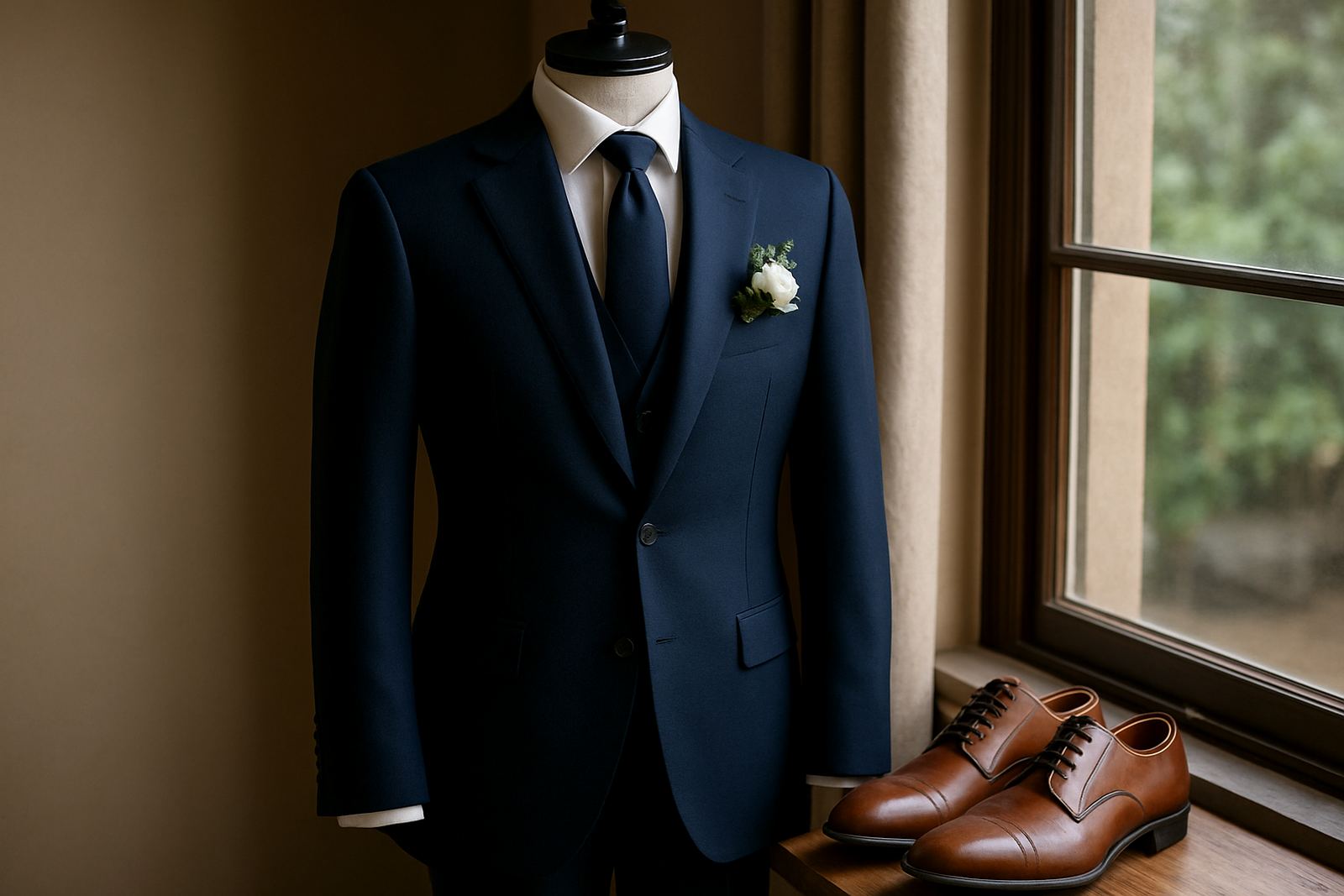
Our team then refined the block for a series of business shirts, adjusting for collar height, cuff stance and the amount of ease through the torso. The cut was kept clean and classic, with enough shape to look tailored but not so much that the shirts became fussy. We made sure the collar sat neatly with and without a tie, because Sandton workwear often shifts between both in the same week.
- Online fitting followed by studio confirmation
- Pattern adjusted for shoulder slope and seat comfort
- Collar set for tie and open-neck wear
- Sleeve length matched to jacket exposure
Fabric, collar and cuff choices for daily wear
For this project we supplied fabrics suited to frequent use, with a smooth handle, decent breathability and enough body to keep the shirt crisp through a long day. The final selection needed to work in Johannesburg office conditions, where air-conditioning can be sharp in the morning and heat builds later in the day. We avoided anything too delicate because the client wanted a shirt that would hold up under regular wear and washing.
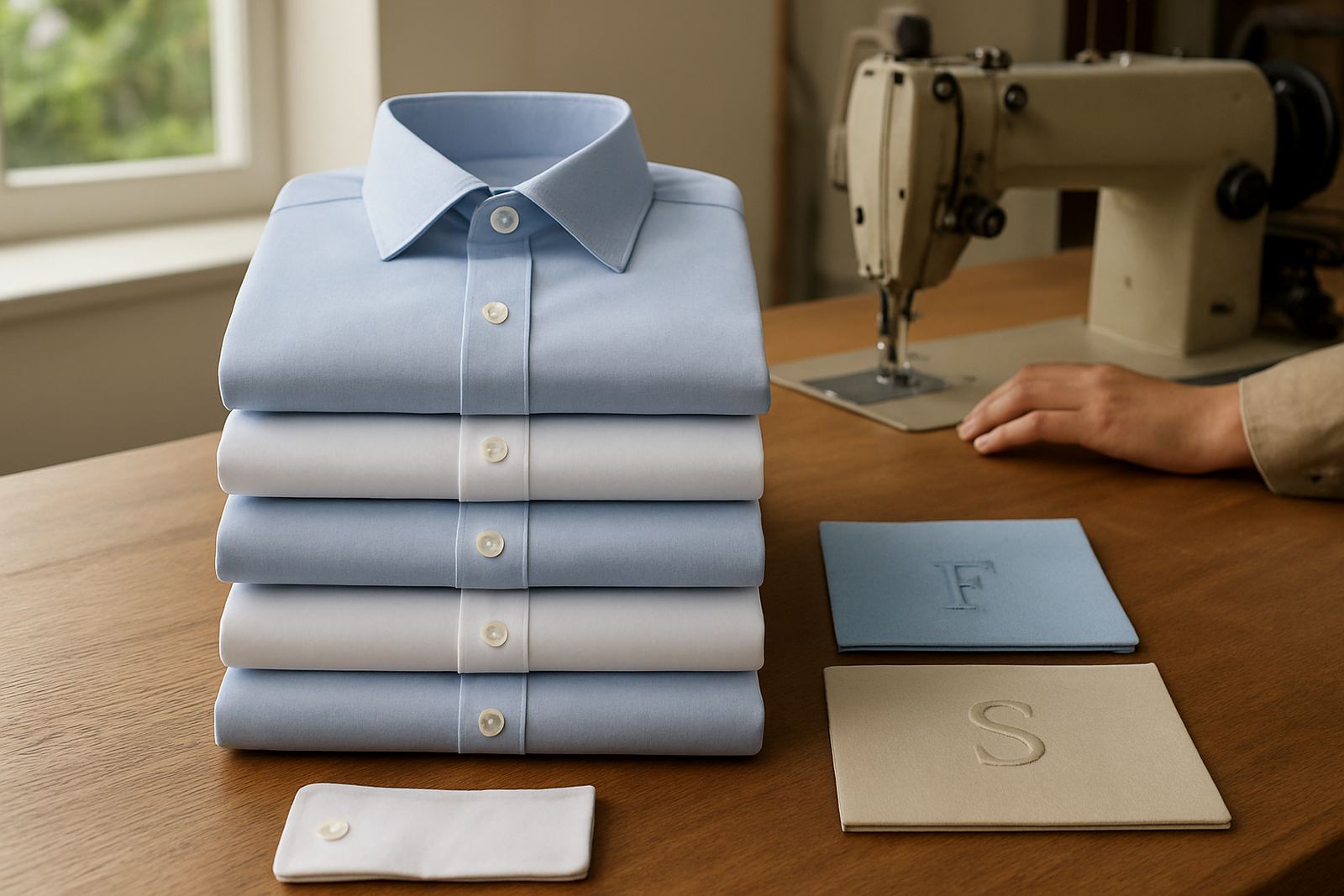
The collar shape was chosen to stay tidy under a suit jacket and still look balanced without a tie. We kept the cuffs structured enough for cufflinks when needed, but not stiff for its own sake. Each shirt was finished for easy rotation, and we paid close attention to seam balance, button spacing and hem length so it tucked smoothly and stayed put. That level of detail is what makes a set of shirts worth the spend, instead of just another pile in the cupboard.
- Fabric weight suitable for year-round Sandton office wear
- Medium structure for shape without stiffness
- Collar designed for tie and open-neck use
- Reinforced buttons and neat top-stitching
Timeline from first fitting to final delivery
The project ran over three weeks from initial consultation to final handover. Week one covered the enquiry, measurement review and style decisions. In week two we completed the studio fitting, refined the pattern and cut the shirts for production. Week three was for finishing, final checks and collection planning, with courier delivery available if the client needed it. The pace suited a working executive who could not spend time coming back and forth for unnecessary adjustments.
Because the shirts were part of a weekly rotation, we built in a margin for consistency checks before release. That included collar alignment, sleeve pair matching and a final review of body length across the set. Nothing dramatic, just proper work. When people are buying made-to-measure shirts for business use, they want certainty, not surprises, so we keep the process tight and practical.
What changed once the shirts were in rotation
The result was a small but reliable shirt wardrobe that worked across the week without constant adjustment. The client had cleaner lines through the chest and waist, less collar irritation and better sleeve balance under jackets. Most importantly, the shirts stayed consistent from one piece to the next, which is what makes daily dressing easier for a busy professional. You do not need to think about whether the shirt will behave, that decision was made in the fitting room.
For us, the success of this project was in the practical outcome. The client could get dressed quickly, travel across Sandton and into surrounding business districts, and still look composed by the time he walked into a meeting. Fit consistency also reduced the need for post-delivery tweaks. A shirt that works once is useful. A shirt that works every time becomes part of a working system.
What we would repeat on the next executive order
If we were making this set again, we would keep the same approach: early measurement review, one strong studio fitting and clear agreement on how the shirts must sit under a jacket. That structure saved time and gave us the control needed for repeat pieces. We would also keep the fabric range focused, because too many options can slow decisions without improving the end result. For executives, clarity helps.
We would repeat the same fit notes on shoulder line, collar balance and waist shaping, then build future shirts from the same pattern family so replacements stay consistent over time. That is especially useful for clients who want a dependable rotation through the working week. It makes reordering simple, and simple is usually what a busy Sandton wardrobe needs.
- Keep the same block for future repeat orders
- Use the same collar family for consistency
- Maintain measured waist shaping without tightness
- Record fit notes for easy reordering later
Key facts
| Project type | Made-to-measure executive shirts |
|---|---|
| Client location | Sandton, Johannesburg |
| Timeline | 3 weeks from first fitting to delivery |
| Fit method | Online review plus studio fitting |
| Fabric direction | Smooth business shirting with daily wear durability |
| Outcome | A consistent weekly rotation with jacket-ready fit |