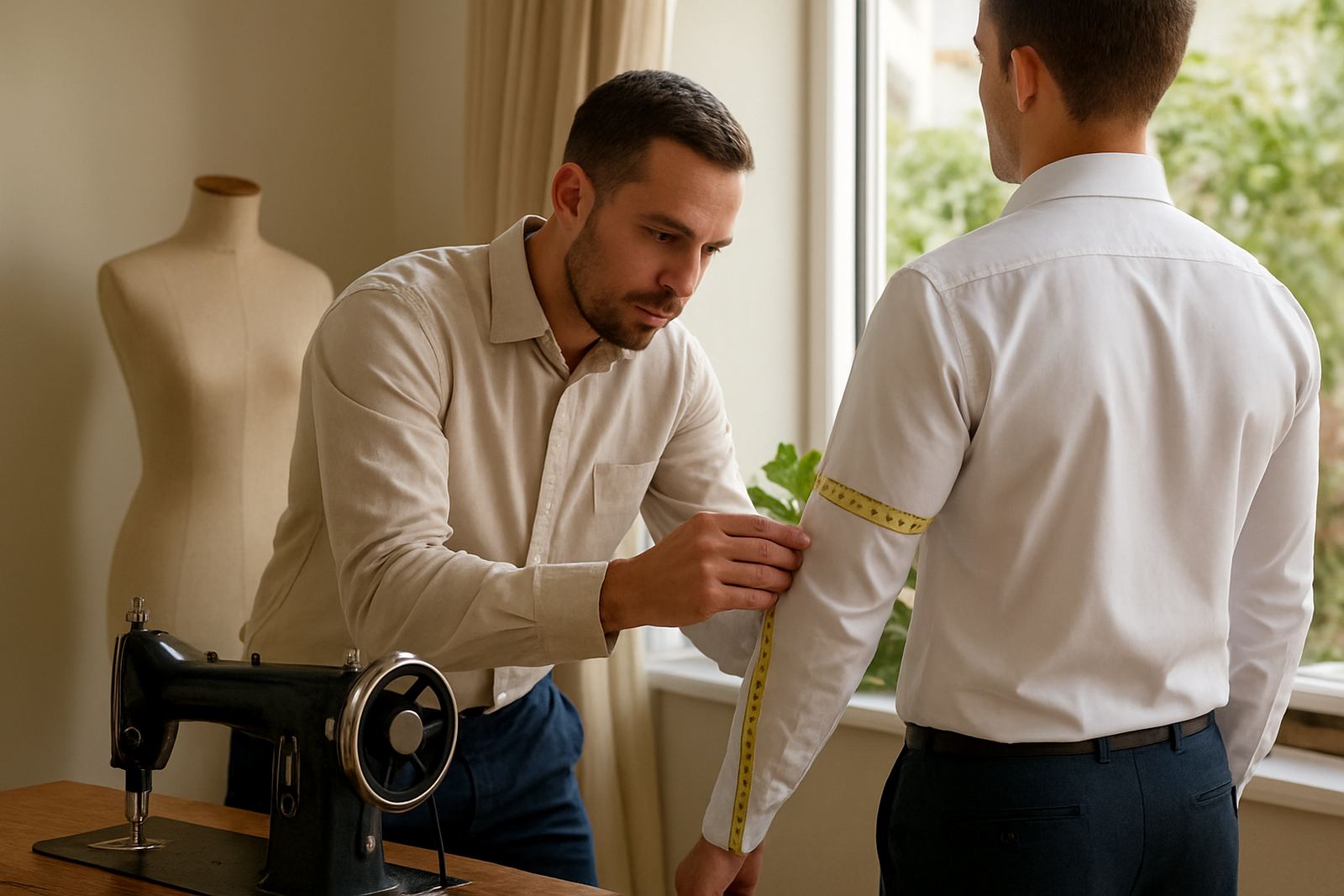
Start With A Good Tape And A Calm Setup
Before you begin, find a soft tape measure, a mirror, and a flat surface for writing down each number. Wear close fitting clothing or measure over light underwear so the tape sits properly and does not add extra bulk.
If possible, ask someone to help with the back and shoulder measurements. It makes the process easier and cuts down on small errors that can affect the final fit. Take each measurement twice, then record the second one if it matches. If it differs, take it a third time.
- Stand straight but do not suck in your stomach or lift your shoulders.
- Keep the tape level and snug, not tight.
- Measure in centimetres, not inches.
- Use the same posture for every measurement.
How To Measure For A Shirt That Sits Well
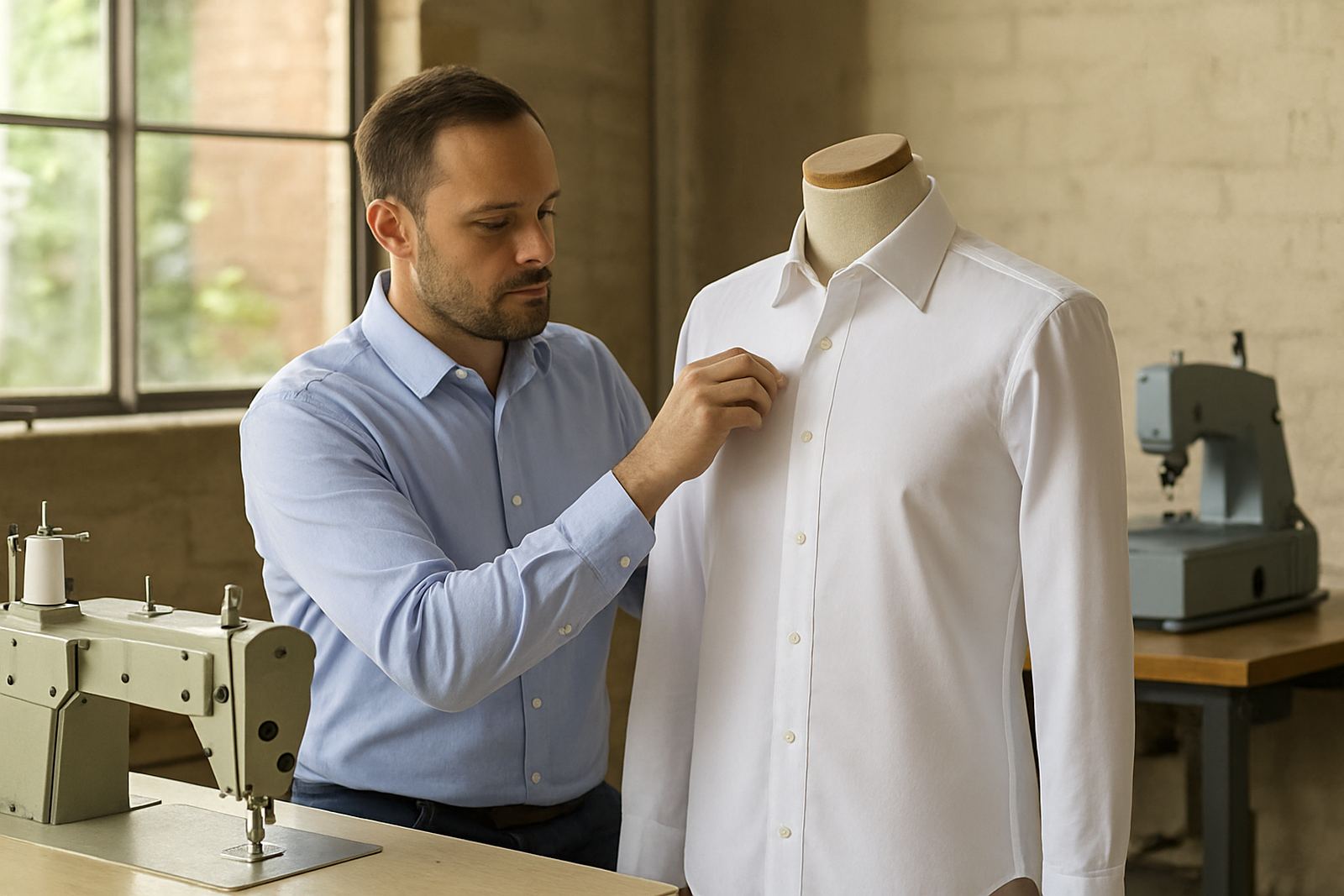
For made-to-measure shirts, the key points are neck, chest, waist, hip, sleeve length, shoulder width, and shirt length. A shirt should allow movement when you sit, reach, or drive, but it should not hang loose at the sides.
Measure the neck around the base where a collar would sit. For chest, wrap the tape around the fullest part under the arms and across the shoulder blades. For sleeve length, bend the elbow slightly and measure from the shoulder point to the wrist bone. If you have broad shoulders or one shoulder sits lower, note that as well. That small detail helps us balance the shirt better.
- Neck should allow one finger to fit comfortably under the tape.
- Chest must be taken with arms relaxed at the sides.
- Waist is measured where you naturally bend.
- Shirt length is usually measured from the top of the shoulder to the point where you want the hem to finish.
How To Measure For A Suit Jacket And Trouser
A suit needs a different approach because the jacket and trouser must work together. For jackets, we look at chest, waist, shoulder width, sleeve length, back width, and overall jacket length. For trousers, we need waist, seat, thigh, knee, ankle, and inside leg. If you already own a jacket or trouser that fits well, you can compare those measurements with your body measurements for extra confidence.
When measuring trousers, stand naturally and keep your feet about hip width apart. The inside leg should be measured from the crotch seam area down to the shoe break point you prefer. For a cleaner look, some clients prefer a slight break, while others like a shorter hem for warmer weather in Durban or Cape Town. Let us know your preference so the cut matches your wardrobe use.
- Measure trouser waist where the trouser will actually sit, not always where jeans sit.
- Take the seat around the fullest part of the hips and buttocks.
- Record the knee and ankle if you want a tapered leg.
- Tell us if you wear braces, a belt, or both.
What To Do If Your Numbers Fall Between Sizes
It is normal for measurements to sit between two points. In that case, do not round too much. Send the exact number and add a note about how you like your clothing to feel. Some clients prefer a closer fit for office wear in Sandton or Pretoria, while others want extra room for travel, weddings, or long days at the office.
If you are unsure, add a short comment about where you want more ease. For example, you may want more room across the stomach, a slimmer sleeve, or a jacket that allows for layering in cooler Johannesburg weather. Those little notes help us make practical choices during cutting and fitting.
- Do not force the tape to match a size label you already wear.
- Share any changes in weight, posture, or shoulder shape.
- Tell us if you want a formal fit or a more relaxed fit.
- Note any preferences for cuffs, collars, lapel width, or trouser rise.
Common Measuring Mistakes We See Often
The most common mistake is pulling the tape too tight. That usually gives a smaller number and leads to clothing that feels short or stiff. Another issue is measuring over thick clothing, especially in winter, which can add extra centimetres without you noticing. We also see clients measure at different points each time, which creates mixed results.
Another small error is standing differently for each measurement. If you lean forward for the chest and stand taller for the waist, the set will not match properly. Keep the same stance from start to finish and if you are unsure, send a note with the measurements so we can check them against your fit preference.
- Do not use old school uniform measurements unless they are still current.
- Do not guess shoulder width.
- Do not measure after a big meal or after exercise.
- Do not leave out the units, we need centimetres for accuracy.
How We Use Your Measurements For The Final Cut
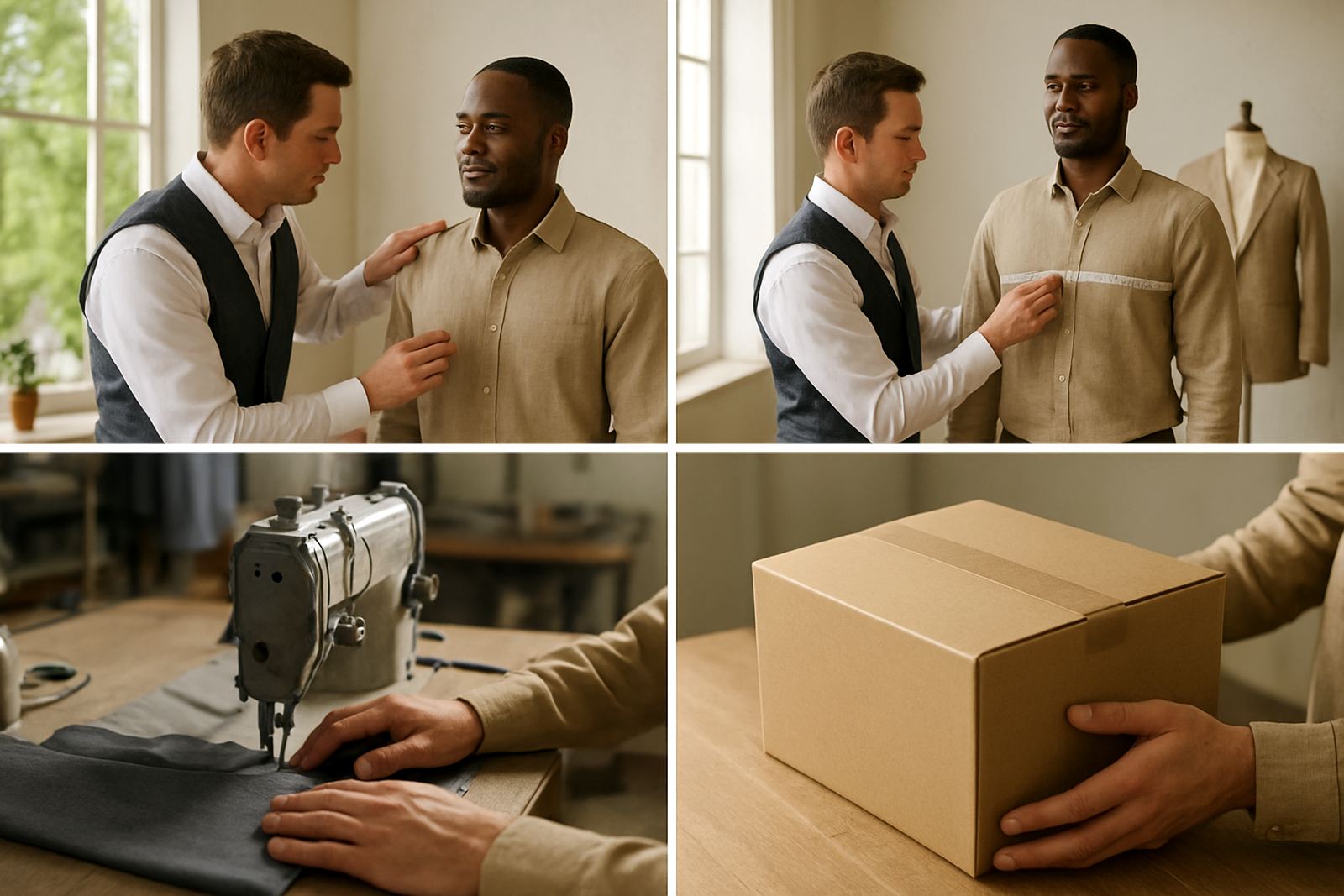
Once you send your measurements through the enquiry form, our team reviews them together with your style choices, fabric selection, and order notes. Sibusiso Mthembu oversees the business, while the cutting and fitting team checks for balance, posture, and any special fit details before production starts.
For online orders, clear measurements help us reduce back and forth and keep courier delivery moving smoothly across South Africa. If your measurements suggest a possible adjustment, we may ask a follow up question before cutting begins. That extra step is worth it, especially for wedding suits, corporate orders, or repeat shirts where consistency matters.
- We compare body measurements with your preferred fit.
- We check for shoulder slope, chest shape, and waist balance.
- We use your previous orders where available to improve consistency.
- We keep notes for repeat orders so later shirts and suits match better.
When To Book A Studio Fitting Instead
Some clients are happy taking measurements at home, but a studio fitting can help when the body shape is harder to measure accurately. This is useful after major weight change, for first time suit wearers, or if you have never had tailored clothing before. It also helps if you want to compare cloth, collar height, cuff style, or trouser rise in person.
If you are in Rosebank or nearby areas such as Sandton, Randburg, Midrand, Pretoria, Durban, or Cape Town, a studio appointment can make the process simpler. For clients elsewhere, the online method works well when measurements are taken carefully and notes are added. Either way, we will work with you to get the fit sorted properly.
- Choose a studio fitting if your measurements are changing a lot.
- Choose online fitting if you want convenience and already know your size pattern.
- Ask for help if you are measuring alone and cannot reach the shoulder or back properly.
- Use the same form of measurement for every future order.