
When workwear must look right all day
Business wardrobes in Johannesburg, Pretoria and along the coast need more than a clean finish. Shirts must move well under a jacket, collars need to sit neatly after a long commute, and trouser rise should stay comfortable through meetings, driving and travel. For many clients, the problem is not a lack of clothing, it is the fit. Sleeves run short, waists pull after lunch, or the shoulder line sits too wide and makes a suit look borrowed. That is where made-to-measure helps.
Our business clients usually want a small, dependable set of pieces they can wear on repeat without looking tired. A fitted white shirt, two blue shirts, a navy suit, a charcoal suit and one pair of versatile trousers will carry most weeks. Add fabric choices that handle load-shedding heat, winter office aircon, and humidity in Durban or Cape Town, and the wardrobe becomes easier to manage.
What professionals usually order
Most weekday wardrobes start with a practical clothing set that can be mixed and matched. We help clients plan around meeting days, client visits, presentations and travel, so each item earns its place.
- White and light blue shirts for boardroom use and formal meetings
- Mid blue or striped shirts for weekly rotation
- Navy or charcoal suits for interviews, pitches and client-facing work
- Two pairs of trousers, one for heavier use and one for lighter rotation
- Optional waistcoat or extra jacket for formal events and weddings
- Alteration refinement for existing garments that are nearly right but not quite
Fabric selection matters here. Business clients often prefer cloth that breathes well, holds shape and irons cleanly. In hotter provinces we often guide people away from heavy cloth, while in cooler months a slightly firmer weave gives the suit more structure without feeling stiff. Small details like cuff style, collar height and pocket choice help the garment fit the way the client actually works.
How the fitting process works in practice
Clients can begin with an online fitting or visit the Rosebank studio for a more hands-on fitting. We also assist Sandton, Pretoria, Midrand, Randburg, Durban, Cape Town and nationwide clients through courier delivery. For many business professionals, the easiest route is to plan the first order around a key date, then add repeat orders once the fit is confirmed.
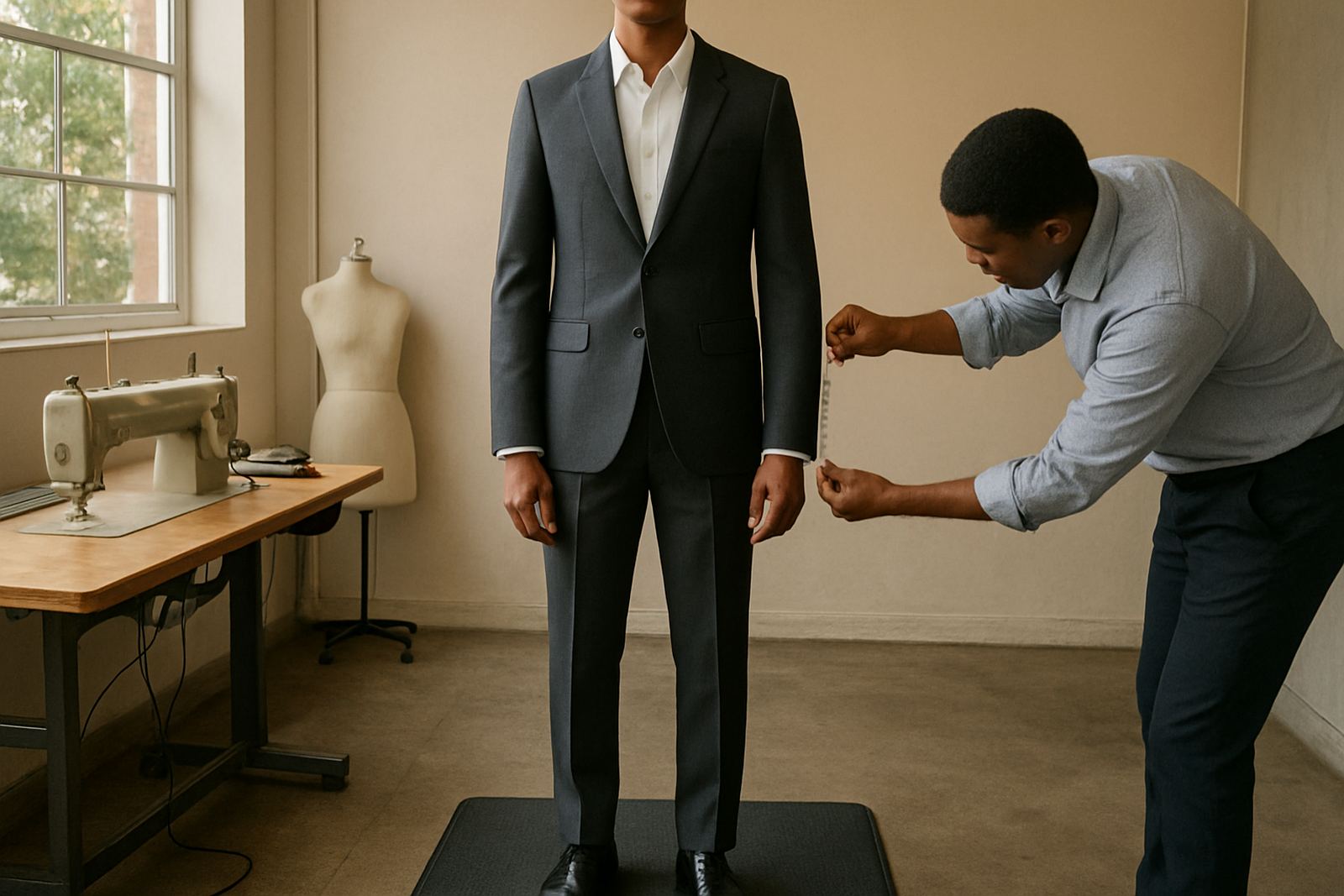
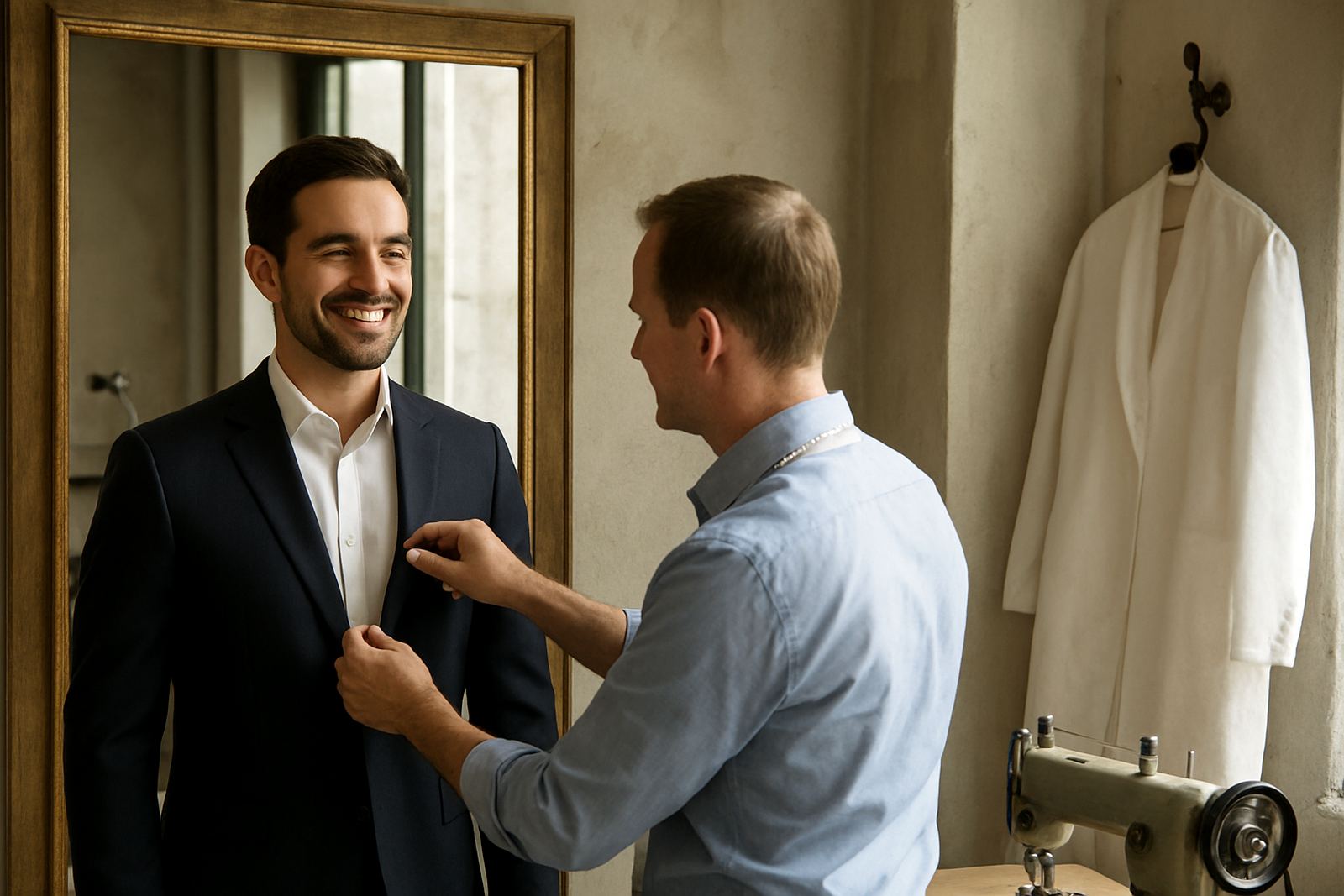
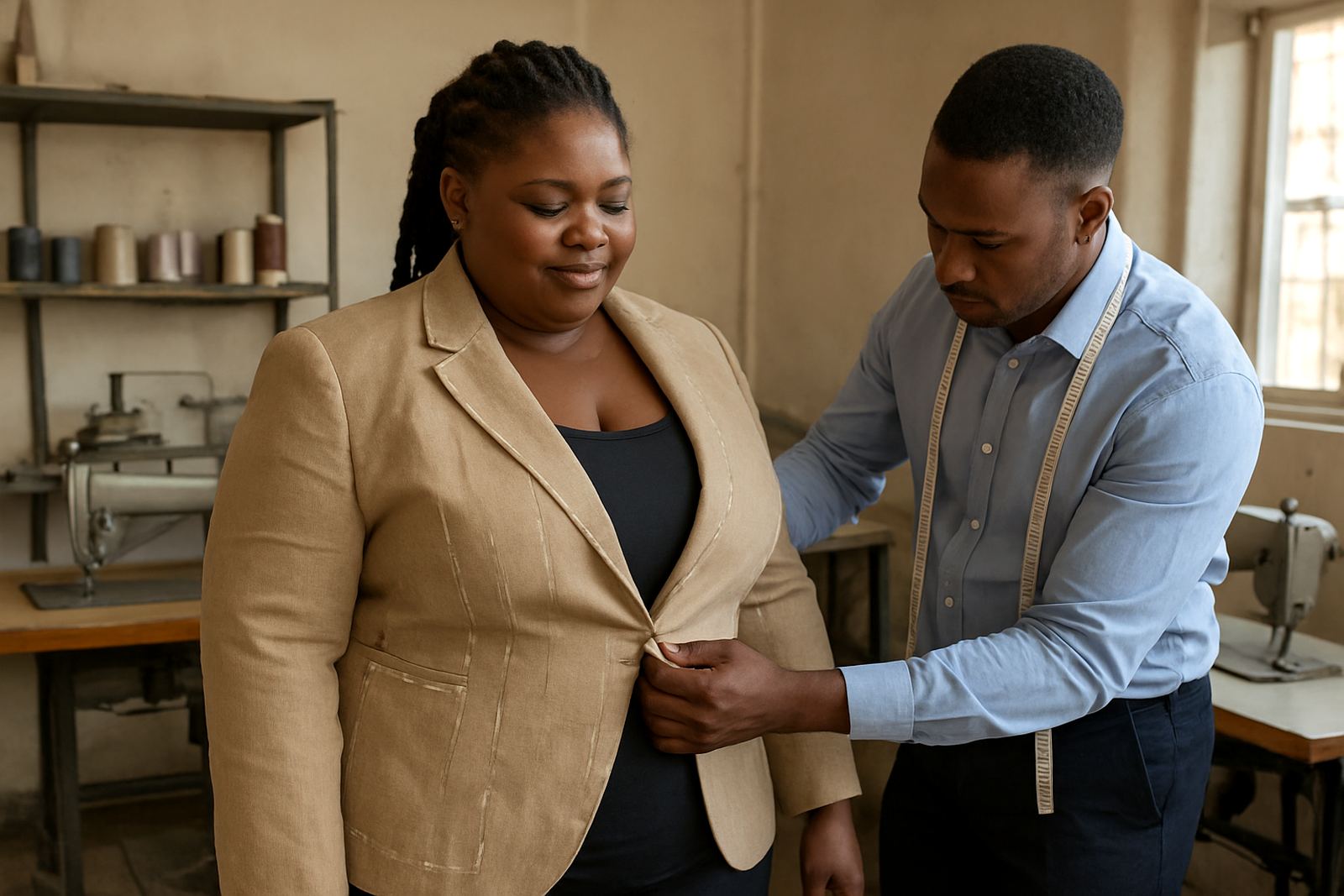
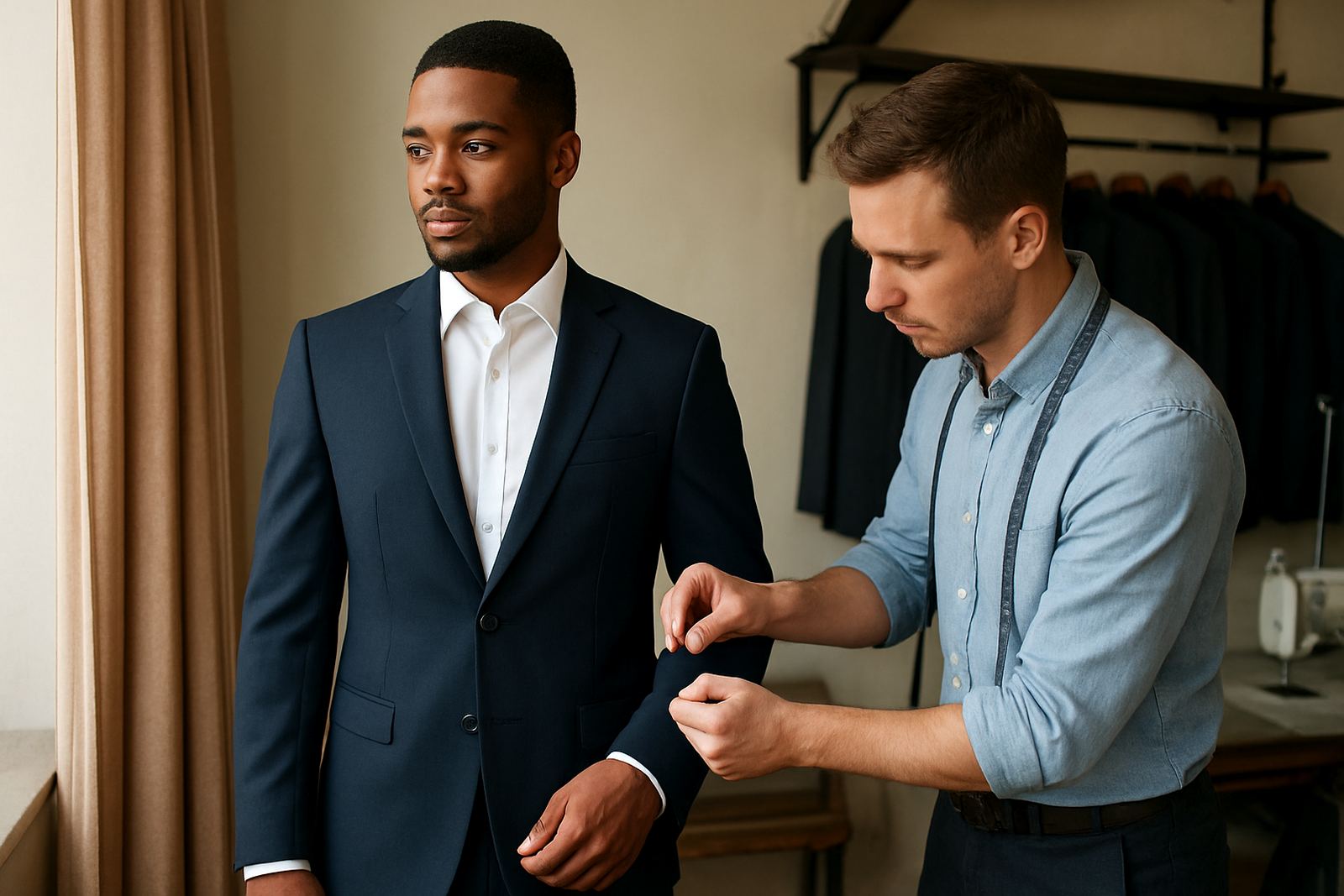
The usual process is straightforward. We review the intended use, talk through the kind of office environment, and note any fit concerns such as broad shoulders, a fuller seat, longer arms or a short torso. From there the cut is adjusted to suit the wearer rather than forcing the wearer into standard sizing. That saves time later and cuts down on costly alterations.
- Studio fitting for detailed measurements and styling guidance
- Online fitting for clients who travel or work from another city
- Style consultation for collar, cuff, lapel and button choices
- Fabric selection based on season, use and maintenance needs
- Courier delivery for completed garments across South Africa
Planning a professional wardrobe around your week
A good business wardrobe should be planned around how often you wear each item. If you are in meetings four days a week, a single suit is not enough. If you travel between Sandton, Pretoria and client sites, you need garments that can be packed and worn with minimal fuss. For this reason, we usually advise clients to build in layers of use: one formal option, one everyday option, and one backup item in case of spillages, weather or last minute events.
Colour choice should also be practical. Navy, charcoal, white and pale blue are easy to rotate and work across most professions. Patterns can be introduced later, but only once the base wardrobe is sorted. A busy professional does not need twelve shirts that all fight for attention. They need a neat, predictable system that keeps mornings simple and still looks polished.
- Start with the most worn item, usually the white shirt or navy suit
- Choose fabric weight for the season and the city you work in
- Keep one spare shirt ready for travel or long meeting days
- Match jacket structure to your shoulder line and posture
- Allow enough turnaround time before launches, conferences or interviews
Common mistakes business clients make
The biggest mistake is buying for a label instead of fit. A suit can be expensive and still sit badly at the neck, waist or hem. Another common problem is ordering a shirt with too much room because the client wants comfort, only to find the extra cloth makes the body look untidy under a jacket. Fit should support comfort, not hide the person inside loose fabric.
Clients also sometimes forget that office wear needs maintenance. Shirts worn several times a week must be easy to press and strong enough for regular washing. Heavy cloth can feel impressive on the hanger but become uncomfortable in summer or during commuting. A more practical approach is usually better, especially if the garments need to move between office, meetings and evening functions. A minor typo in planning becomes a big issue once the garment is finished.
We also see last-minute orders before weddings, promotions or public speaking events. That leaves too little time for adjustment and refinement, so the garment ends up being rushed. It is better to plan early and leave room for one correction if needed.
Typical budget ranges for weekday tailoring
Budget depends on fabric, garment type and the amount of custom detail required. Business professionals often prefer to spend on a core set that gets frequent use, rather than scattering the budget across many low-value pieces. For many clients, that means one strong suit and several well-cut shirts before anything else.
As a rough guide, made-to-measure shirts often start from around R950 to R1 800 each, depending on fabric and finishing. Tailored suits commonly begin from about R5 500 and can move higher when premium cloth, extra structure or more detailed styling is chosen. Repeat orders are usually more efficient because the fit profile is already recorded. Corporate orders and wardrobe planning can also help teams keep budgets sensible while still looking consistent.
If you are building a work wardrobe for the first time, it is usually best to phase the order over two or three visits rather than trying to do everything in one go. That keeps spending under control and gives room to check what actually gets worn week after week.