When a small team needs to look aligned, not uniform
Small corporate teams usually want a neat, reliable appearance that fits the job. That might mean three partners in a professional services firm, a sales group meeting clients in Sandton, or a management team in Pretoria that needs smart shirts and suits for presentations, board meetings and travel.
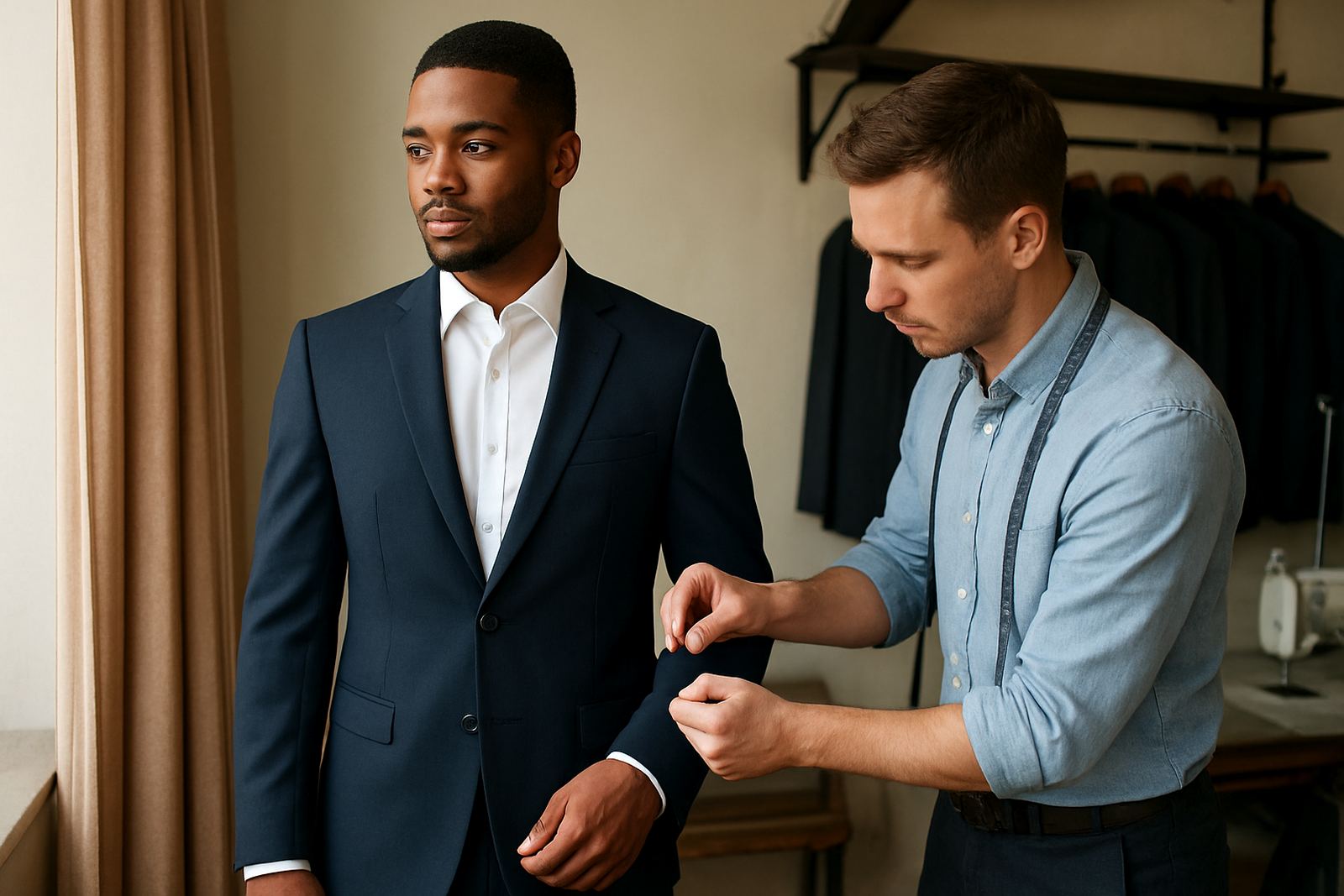
The goal is not to make everyone look the same. It is to give each person a proper fit, a consistent colour range and a clear standard for collars, cuffs, lapels and trousers. That keeps the team looking organised without forcing staff into off-the-rack sizes that pull at the shoulders or sit too long at the sleeve.
- Good for teams of 3 to 20 people
- Works well for mixed body types and different fit preferences
- Useful for office, reception, sales and leadership roles
What a small team order usually includes
A standard team programme often starts with shirts, then adds suits or jackets where needed. For some businesses, the order is as simple as white and light blue business shirts with two suit options. Others want a broader range, including stripes, navy suiting, soft casual Fridays or a second shirt cut for travel days.
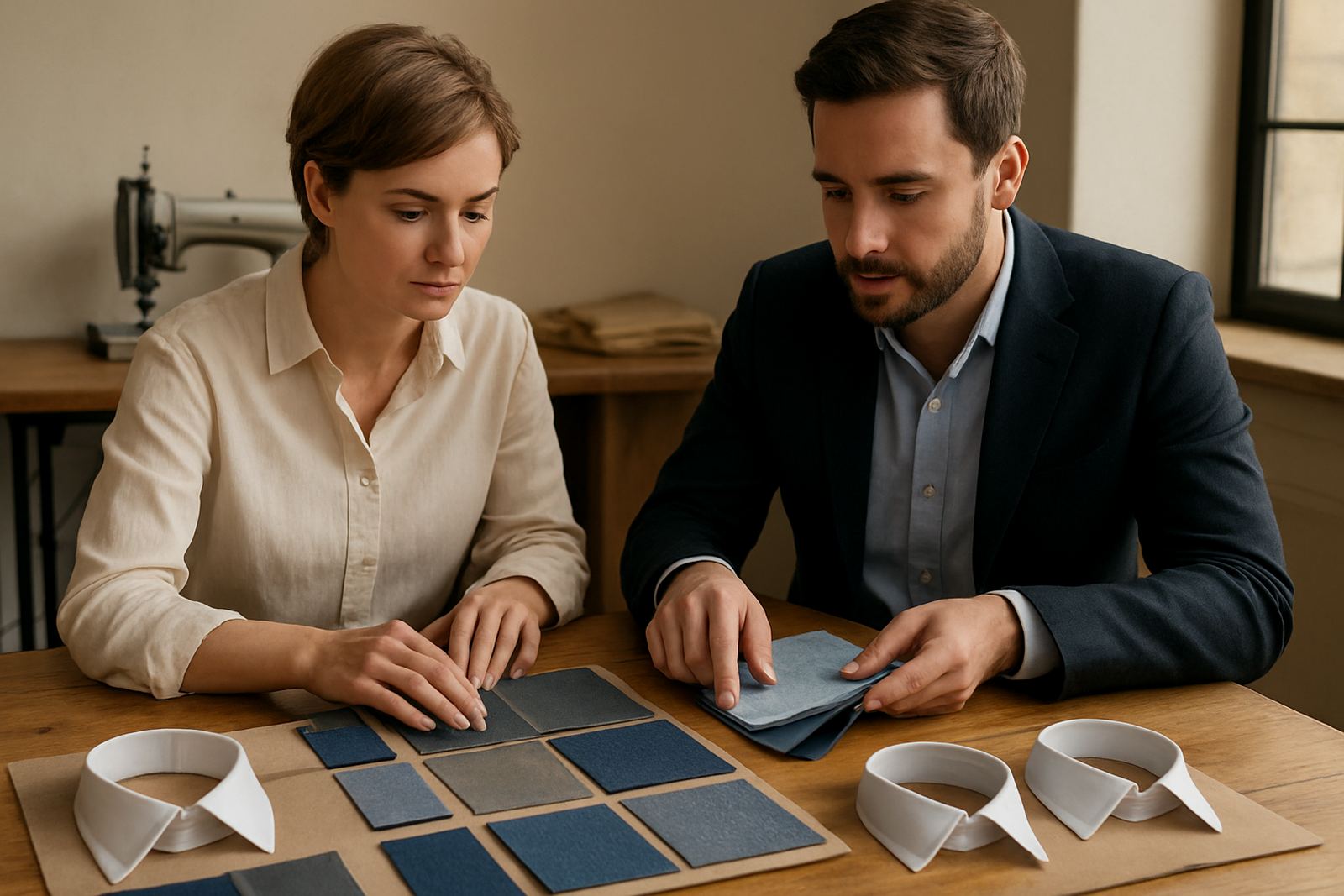
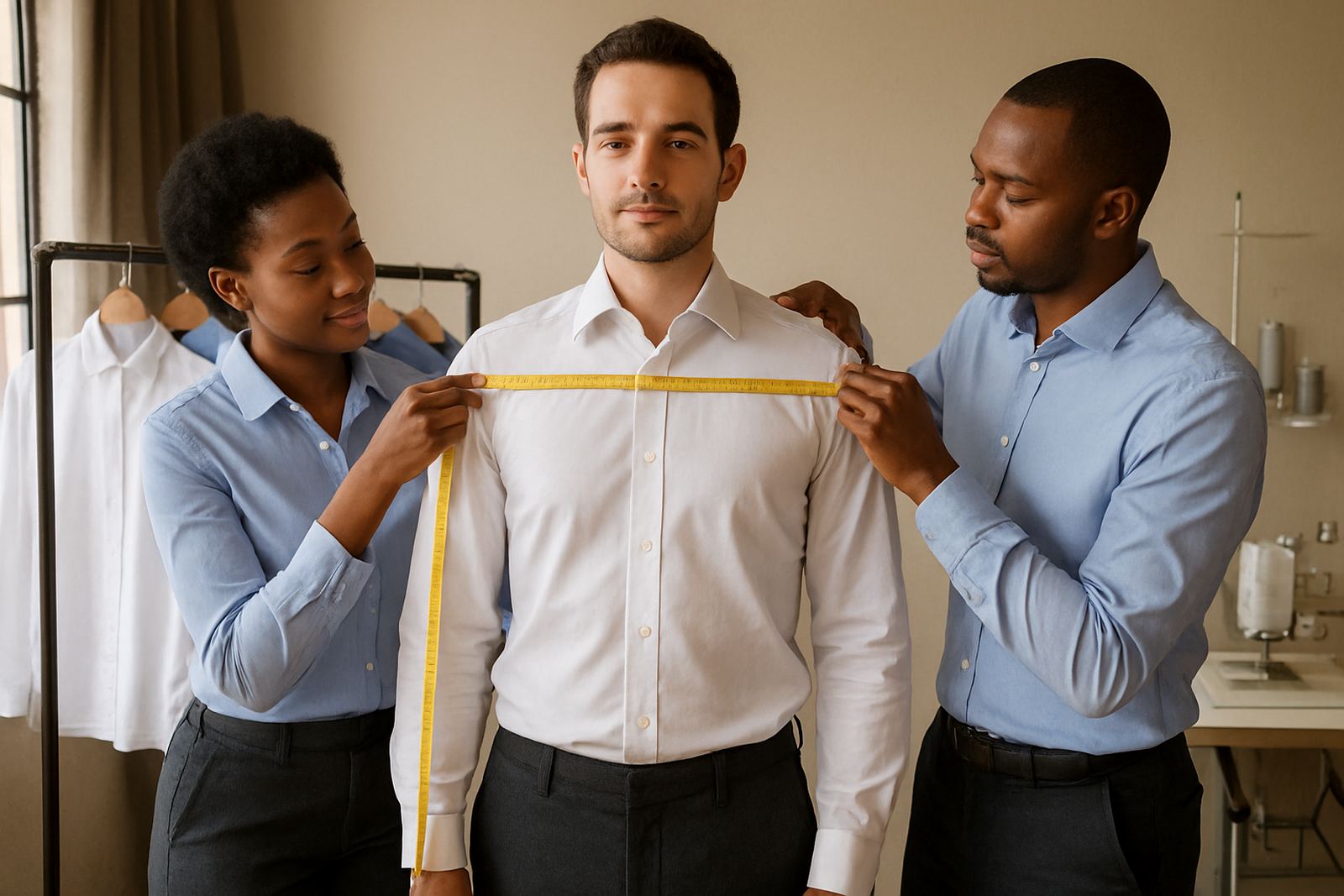
Typical equipment set for the process includes a measuring tape, fitting guide, fabric samples, collar and cuff options, style notes and a measurement record for each person. If the team uses online fitting, measurements are checked against body shape, posture and preference so the end result stays practical. That helps when staff work between offices, or when load-shedding affects travel times and studio bookings need to be staggered.
- Made-to-measure shirts for daily wear
- Two-piece suits for meetings, events and client visits
- Optional trousers, waistcoats and jacket adjustments
- Fabric and finishing choices for comfort in warmer or coastal conditions
Planning the fit across the team
The best results come from planning before anyone is measured. A small team should agree on the dress code first: colour range, how formal the look must be, how often the garments will be worn and whether the team needs one standard cut or a few variations. In Johannesburg and Pretoria, many teams prefer a sharper business finish, while Durban clients often ask for lighter cloth and more breathable shirt options because of the humidity.
We normally suggest grouping the order by use. For example, one set for daily office wear, one set for external meetings, and a slightly more formal option for directors or client-facing roles. That stops the order from becoming too broad and helps keep the budget under control.
- Choose the core colours first, then move to details
- Set the fit standard for each role before fabric selection
- Allow time for a final check before events or launches
Common mistakes small businesses make
The biggest mistake is treating team clothing like a one-size purchase. If one person prefers a slimmer jacket and another needs more room at the shoulder, forcing them into the same pattern leads to discomfort and poor wear. Another common issue is choosing fabric by appearance only. A cloth that looks good in aircon may crease badly in a hot car or during a full day of meetings.
Teams also run into trouble when they leave measurements too late. If the garments are needed for a conference, AGM or new client launch, last-minute fitting can create avoidable pressure. It is better to fit early, confirm the fabric, and leave space for alteration refinement if needed.
- Do not copy one fit across every staff member
- Do not choose fabric without thinking about climate and travel
- Do not leave fitting until the week of the event
Budget ranges that make sense in Rand
For small corporate teams, the budget depends on fabric choice, number of garments and how much custom detail is included. As a practical guide, made-to-measure shirts usually start from about R850 to R1 800 per shirt, depending on cloth and finishing. Suits generally start from about R4 500 to R9 500 per suit, with higher pricing for finer fabrics, additional structure and more detailed custom work.
For a small team programme, many clients set aside R5 000 to R20 000 for a simple shirt project, or R15 000 to R60 000 and up for a mixed shirt and suit order. If the team is ordering in phases, we can split the work across pay cycles or role groups so the spend stays manageable.
- Entry-level shirts for basic corporate wear
- Mid-range options for regular office use
- Higher-end suits for leadership and client meetings
How the order runs from first enquiry to delivery
Teams usually start through the enquiry form on our contact page. From there, the order is planned around location and timing. Rosebank studio visits suit Johannesburg teams, while online fitting works well for clients in Sandton, Midrand, Randburg, Pretoria, Durban, Cape Town and other parts of South Africa. Courier delivery is available for repeat orders and nationwide work.
The process is straightforward: set the brief, confirm the size list, choose fabric, complete fittings, then move to cutting, making and finishing. Once the garments are ready, we check the final fit and arrange delivery or collection. It keeps the order organised and avoids confusion when a team has different schedules.
- Ideal for repeat ordering once the first set is approved
- Useful for firms opening new offices or refreshing the team look
- Works for both one-time projects and ongoing wardrobe planning