
Start with where and how often you will wear the suit
The first question is not the colour or pattern, it is the setting. A suit for Sandton boardrooms, a Cape Town winter wedding, and a Durban business trip will need different cloth weights and finishes. South African weather swings a lot, and one suit can feel perfect in Rosebank but too warm by mid-afternoon in Pretoria.
Begin with three practical points: how many hours you will wear it, whether you travel with it, and if it must handle summer heat, air conditioning or coastal humidity. A suit that lives in a vehicle, gets worn after load-shedding delays, or moves between office and evening event needs cloth that can recover well and still look neat.
- Daily corporate wear: choose a medium-weight cloth that keeps its shape.
- Occasional formal wear: choose a cleaner finish with a softer drape.
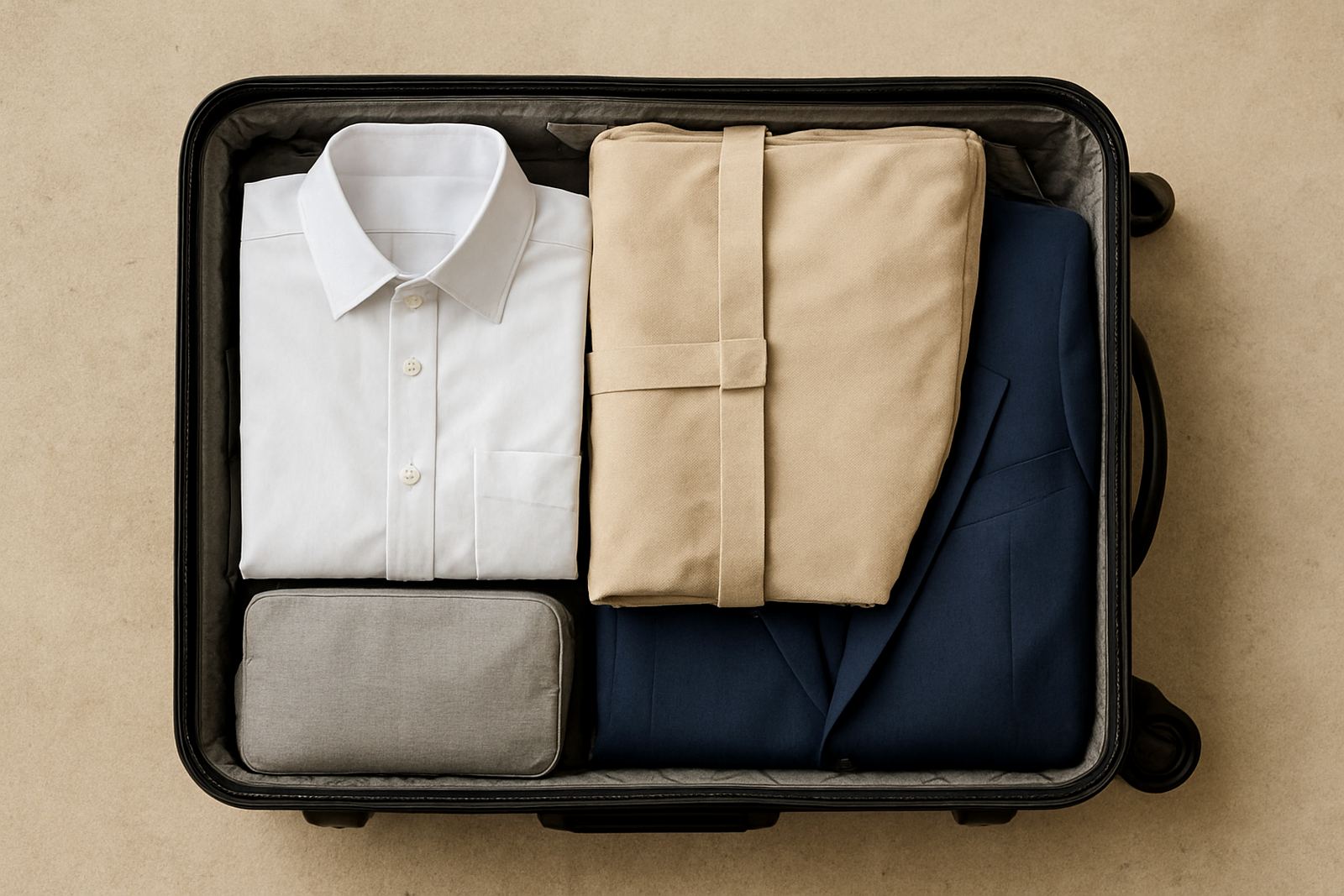
- Travel and weddings: choose cloth that packs and hangs back into form quickly.
Understand drape before you look at pattern
Drape is how cloth falls from the shoulder and moves when you walk. A good drape gives a jacket a smoother line across the chest and lapel, while a stiffer cloth can hold a sharper shape. If you want a more classic, structured look, ask for a cloth that holds a crease. If you want a relaxed, modern finish, a cloth with more fluid movement usually works better.
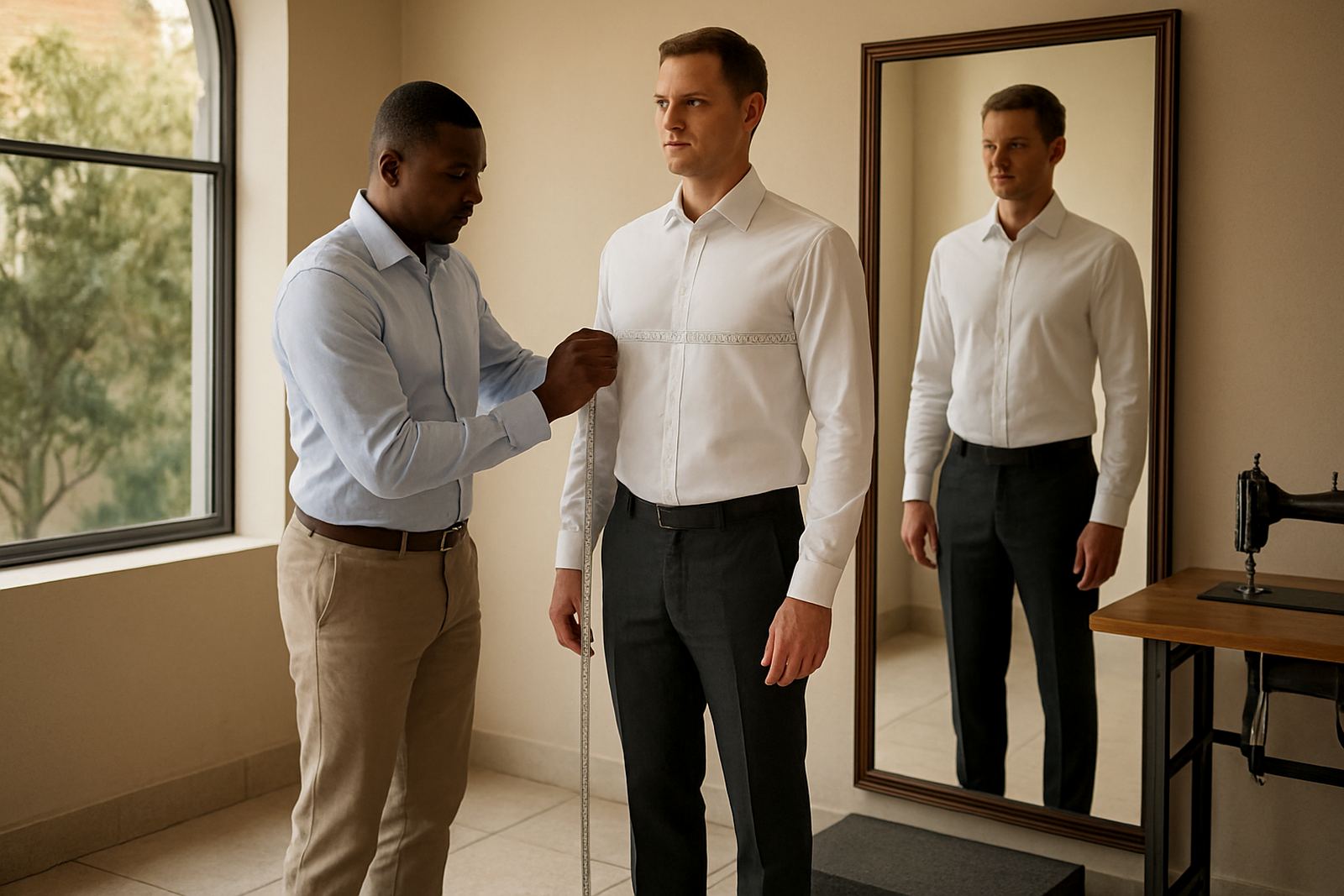
When fitting from our studio in Rosebank or through an online fitting, we look at how the cloth behaves on your frame. Broad shoulders, a fuller chest or a slimmer build each respond differently to the same material. The wrong drape can make a suit feel boxy or limp, even when the measurements are right.
- Sharp, formal look: firmer cloth and cleaner structure.
- Natural movement: softer cloth with more flow.
- For slimmer silhouettes: avoid fabrics that add too much bulk.
Match breathability to Gauteng heat and coastal humidity
Breathability matters most in warm weather and long days. In Johannesburg and Pretoria, the sun can heat up a suit quickly, especially on outdoor walkways and in traffic. On the coast, humidity changes how cloth feels on the body and how fast it recovers after wear. If you run hot or spend time between venues, a fabric that breathes well will be more comfortable through the day.
Wool suit cloth remains a strong choice because it balances comfort, structure and seasonality. Lighter weights are useful for summer and indoor wear, while slightly heavier cloth works better for cooler months and windy conditions. For most clients, the sweet spot is a cloth that is light enough for comfort but not so light that it creases early, thats where many suits go wrong.
- Hot weather: lighter cloth and a breathable weave.
- All day wear: balance comfort with crease control.
- Coastal use: choose cloth that settles well after humidity and travel.
Choose formality based on the occasion, not just the colour
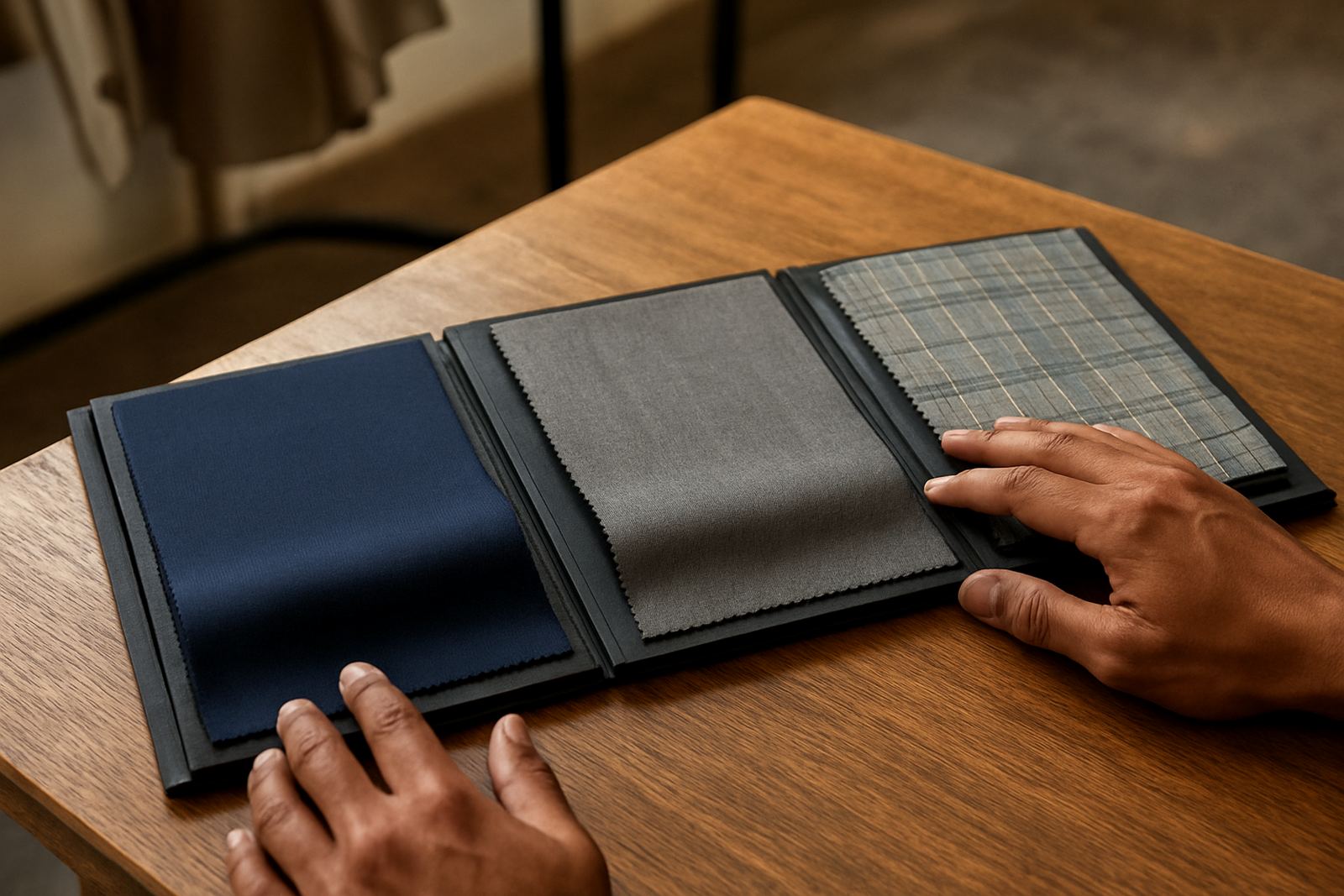
Dark navy and charcoal are often the safest choices for business, interviews and formal functions, but cloth finish also affects formality. A smooth, tightly woven fabric looks smarter than a very textured one, even in the same colour. For weddings, award evenings or executive meetings, the cloth should support the level of dress the event calls for.
Pattern is important too. A plain cloth reads more formal, while subtle stripes or checks add character. If you wear the suit often, keep the pattern restrained so it can work with different shirts and ties. If the suit is for one event, such as a wedding in Durban or a special function in Cape Town, you can push the cloth choice a little further without limiting future use.
- Most formal: plain navy, charcoal or black with a fine finish.
- Business use: subtle texture or a very light pattern.
- Personal style: small checks, soft stripes or a richer cloth surface.
Durability matters if you want the suit to last
Durability is about more than thickness. A good suit cloth should resist shiny wear at the elbows and seat, hold stitches well, and keep its appearance after repeated use. For clients who order corporate suits or wear the same suit every week, this matters as much as style. A fabric that looks lovely on day one but wears quickly becomes expensive over time.
Ask how the cloth handles regular movement, sitting, and light rain. In Johannesburg and Pretoria, dust and constant travel can take a toll. In Durban and Cape Town, moisture and salt air need a cloth that can cope without becoming tired too soon. With repeat orders, it helps to choose a cloth that has already proven itself in your wardrobe, then adjust the weight or finish if needed.
- Weekly wear: stronger weave and reliable recovery.
- Frequent travel: cloth that resists creasing and holds its line.
- Long service life: avoid ultra-light fabrics if the suit will be worn hard.
Use this fabric checklist before you confirm an order
Before you approve your suiting cloth, use a simple checklist. It keeps the choice practical and avoids guessing after the jacket is made. During style consultation, fabric selection or a fitting appointment, we go through these points so the cloth fits the person, the purpose and the climate.
Planning for future additions is useful as well. If the suit may later need a matching trouser, waistcoat or jacket replacement, choosing a common, versatile cloth can make future alterations easier. That is especially useful for corporate orders and wedding parties where different body shapes need a consistent look.
- Does the cloth suit the season you will wear it in?
- Will it feel too warm, too light or just right after a full day?
- Does the drape suit your build and preferred silhouette?
- Is the finish formal enough for the occasion?
- Will the fabric hold up to regular wear and travel?
- Can it work with shirts and shoes you already own?
If you are still unsure, choose the cloth that gives the best balance rather than the most dramatic look. A well chosen suit should feel easy to wear, look right in daylight and still hold its shape after a long day. That is the difference between a suit you admire and one you reach for often.