Start with the jacket shoulders
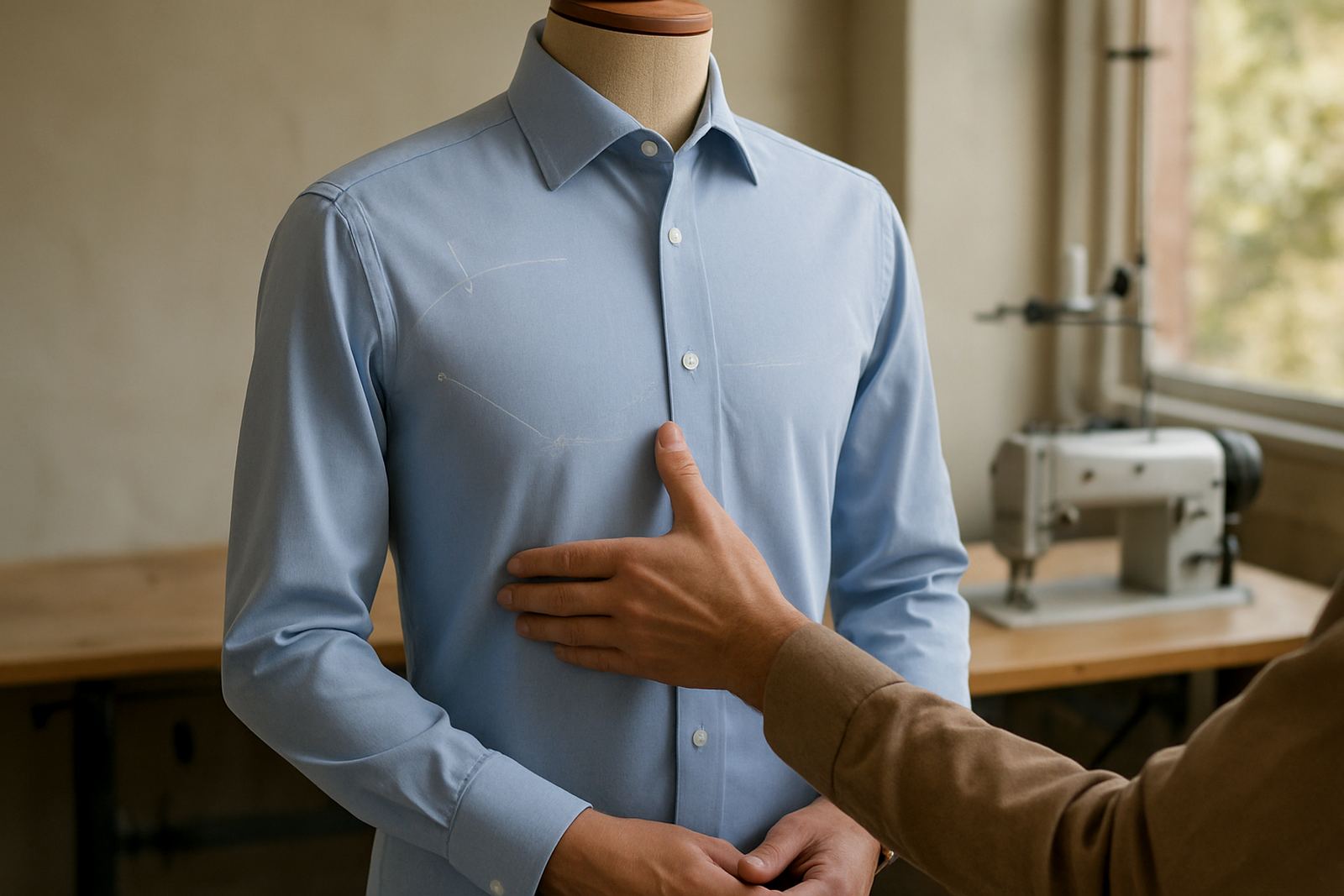
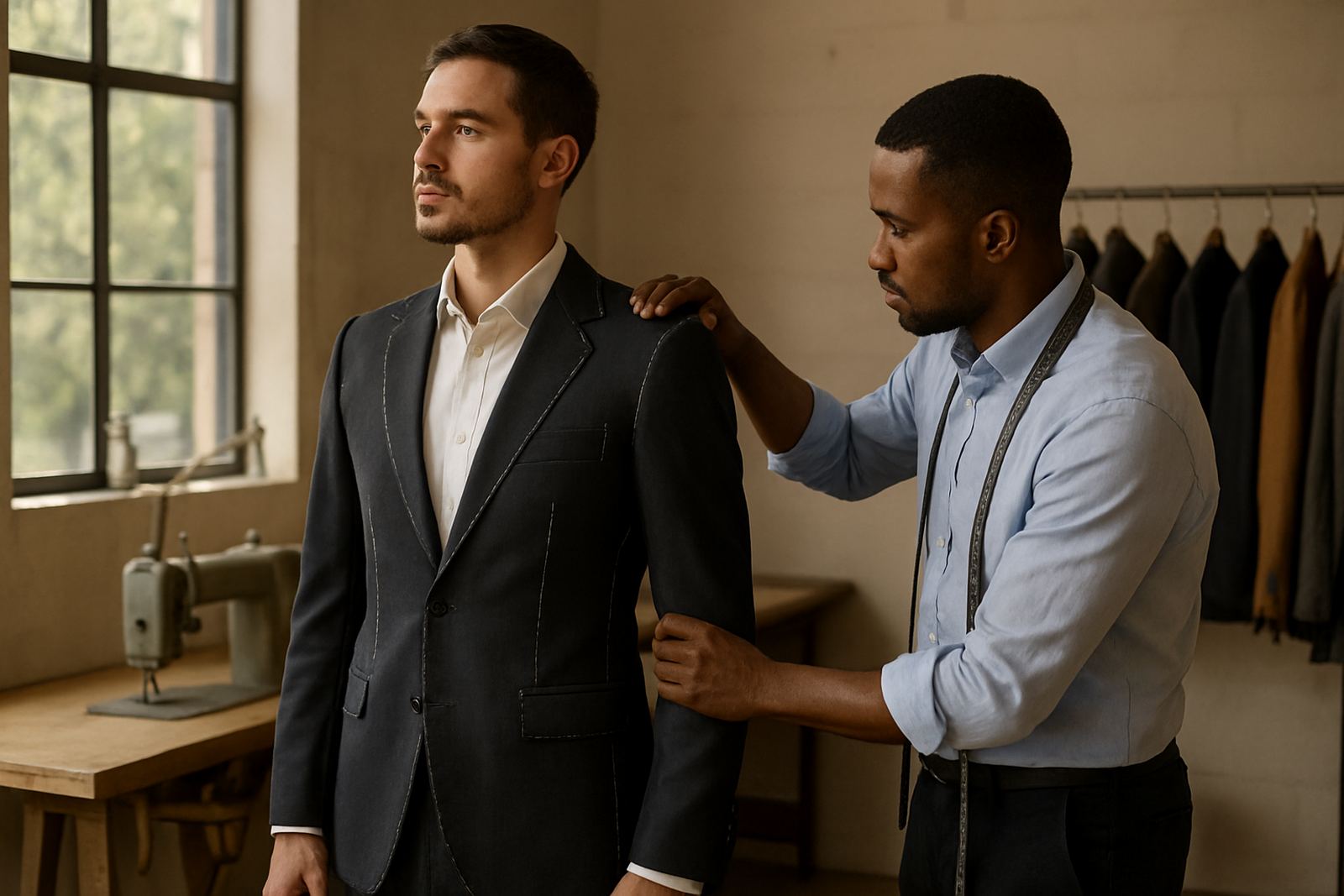
The shoulder is the first place to judge because it is the hardest area to correct later. On a fitted jacket, the seam should follow the edge of your natural shoulder without pushing past it or pulling inward. If the shoulder is too tight, you will see small divots near the sleeve head and the jacket may ride up when you lift your arms. If it is too wide, the shoulder line can look heavy and the sleeve will sit lower than it should.
When you try on a jacket, stand straight with your arms relaxed. The collar should rest flat at the back of the neck and not gap away from your shirt. A slight wrinkle at the top of the sleeve is normal on some body shapes, but deep folds or sharp puckering usually mean the cut is off. In Johannesburg and other inland cities, people often want a cleaner close fit for business wear, but there still needs to be enough room for a shirt and natural movement.
- Check that the shoulder seam ends at the shoulder point
- Lift both arms and see if the jacket pulls across the back
- Look for collar gaps at the back of the neck
- Make sure the sleeve head does not look collapsed or overstuffed
Judge the chest and waist shape
The jacket should skim the chest and then come in at the waist in a way that suits your frame. You want shape, not strain. If the front buttons pull apart, the jacket is too tight through the chest or stomach. If the fabric hangs straight down with no form at all, it may be too loose and can make you look shorter or wider than you are.
Button the jacket and look at the front from the side. There should be enough room for a hand to slide in comfortably, but not so much that the jacket balloons when you sit. A clean waist shape is especially important for wedding suits and client-facing work where the jacket needs to keep its line through the day. In humid coastal areas like Durban or Cape Town, the fit should still allow comfort over a longer wear, since heavy fabric and tight shaping can feel restrictive.
- Button the jacket and check for pulling across the midsection
- Look for a smooth line from the chest to the waist
- Raise your arms, then return to rest and see if the jacket settles back neatly
- Check that the front does not flare open at the hem
Sleeves, shirt cuffs and jacket length
Sleeve length is one of the easiest things to spot and one of the most commonly missed details. The jacket sleeve should end just above the wrist bone and allow a small amount of shirt cuff to show. If the sleeve is too long, the hand can disappear into the jacket and the whole suit looks oversized. If it is too short, the wrist appears exposed and the jacket can feel out of balance.
Jacket length matters as well. A classic rule is that the jacket should cover the seat and create a balanced line from shoulder to hem. Taller men often need a touch more length to keep proportions correct, while shorter men usually need a cleaner cut so the jacket does not overpower the frame. When you stand naturally, the front button area should sit in a position that feels comfortable, not too high or too low.
- Show about 1 cm to 1.5 cm of shirt cuff
- Confirm the sleeve ends near the wrist bone
- Check that the jacket covers the seat cleanly
- Make sure the hem does not make your legs look shorter
Trouser balance from the seat to the hem
Trousers should sit firmly at the waist and hang straight from the seat without pulling across the back. If the seat is tight, the fabric will strain when you sit down and the pockets may open in an unflattering way. If the trousers are too loose, they can sag or twist and the crease will not stay in place. A proper fit leaves room for movement while keeping a neat fall through the leg.
Check the break at the shoe. Some men prefer a slight break for a more traditional look, while others want a cleaner finish with little or no break. Both can work well, but the trouser length must match the shoe and the cut of the leg. For formal office wear in Sandton or Pretoria, many clients prefer a sharper front crease. For weddings or more relaxed tailoring, a slightly softer break can work better. It depends on the style, the fabric and how often you will wear the suit.
- Stand, sit and walk to test the seat and thigh
- Check that the trouser waistband stays in place without a belt doing all the work
- Look at the crease line from hip to hem
- Confirm the hem meets the shoe in the style you wanted
Movement checks before you approve the fit
A suit can look correct in one pose and fail in normal use, so always test movement. Sit in a chair, reach forward, and cross your arms. The jacket should not twist badly or dig into the shoulders. You should be able to button and unbutton the coat without strain. If you are wearing the suit for long meetings, travel, or a full wedding day, comfort matters as much as appearance.
For online fittings and studio fittings, this is where careful notes make a real difference. Tell us if you usually wear your jacket closed, if you need space for a fuller shirt, or if you want a neater line for photographs. Small details such as shoulder slope, posture and one shoulder sitting lower than the other can change the final result. Good fitting is not about making everyone look the same, it is about matching the cut to the person. Sometimes the smallest adjustment gives the best result, and it shows once the suit is worn properly.
- Lift your arms and hug yourself to test ease
- Sit for a few minutes and check for pulling at the back
- Walk naturally and see if the trousers stay straight
- Use a mirror from the side as well as the front
Simple fit checklist before your final order
Use this checklist before confirming your suit details. It helps to separate what is a true fit issue from what is just a style preference. Some men want a stronger shoulder, others prefer a softer silhouette, and both can be correct if the rest of the suit is balanced. The aim is to avoid guesswork and make sure the garment works for your body and your usual way of dressing.
When you send measurements or visit the studio, note the points below and keep them consistent for future orders. That is especially useful for repeat tailoring, corporate orders, or a second suit in a different cloth. A fit that works in wool may need a different allowance in a lighter fabric. Even the same client can need slight changes from winter to summer weight cloth.
- Shoulders sit flat and end at the correct point
- Chest closes without strain and without excess looseness
- Waist is shaped but not tight
- Sleeves show a small cuff and end at the right spot
- Trousers sit cleanly at the seat and fall neatly to the shoe
- Movement feels easy when sitting, standing and reaching
When a small alteration is enough
Not every fit issue means starting again. A slight sleeve adjustment, trouser hem correction or minor waist refinement can often bring the suit into better balance. If the shoulder is correct, the rest can usually be fine tuned more easily. If the shoulder is wrong, the whole jacket may need a bigger rethink. That is why the first fitting matters so much.
Made-to-measure shirts and suits are handled through online and studio fittings for clients across South Africa. From Rosebank and Sandton to Pretoria, Durban, Cape Town and nationwide delivery, the focus stays on practical fit and clear communication. If you are unsure about one part of the suit, it is better to raise it early than to wait until the garment is finished. A good fit is usually the result of a few careful decisions made in the right order.