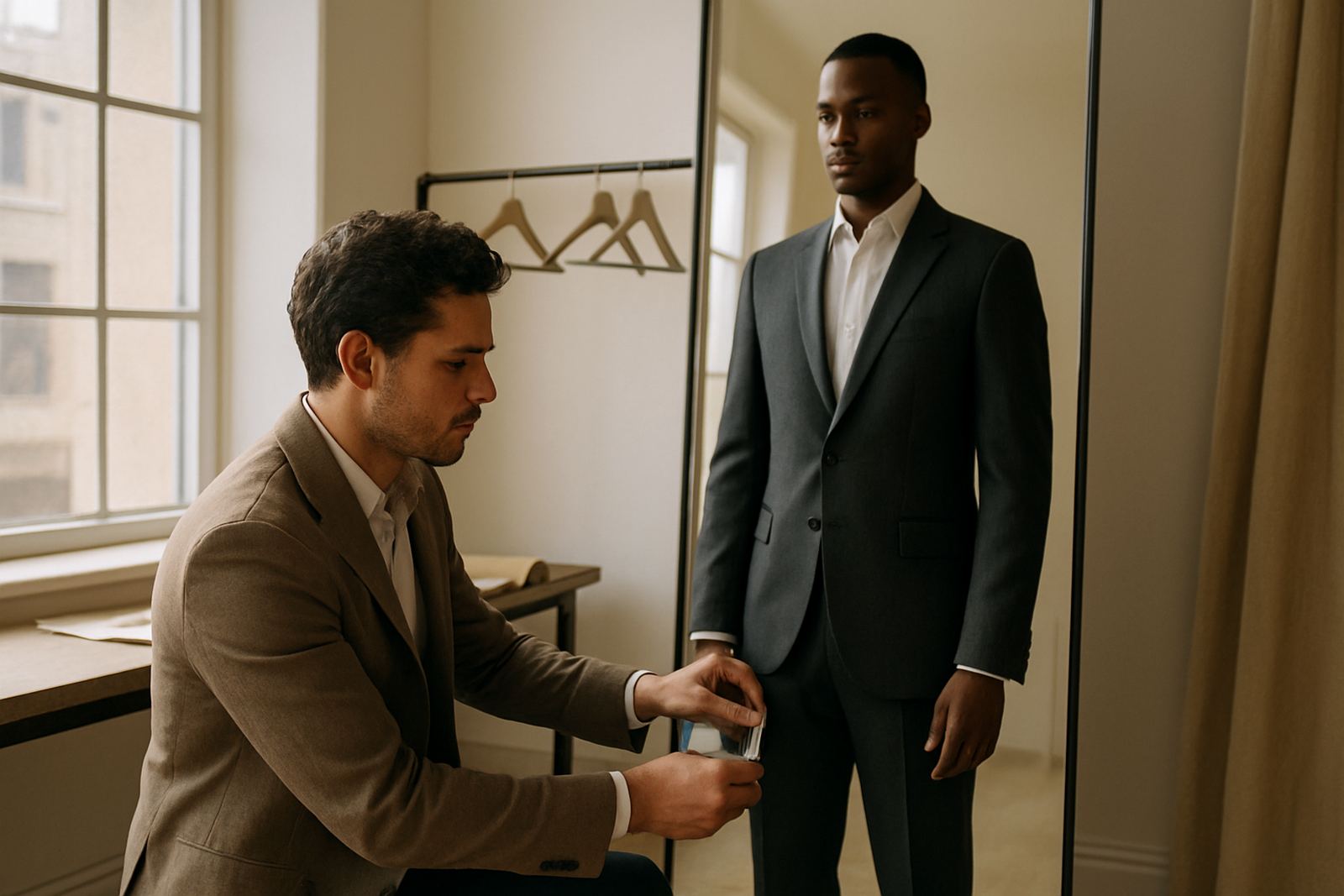
Why jacket length changes the whole outline
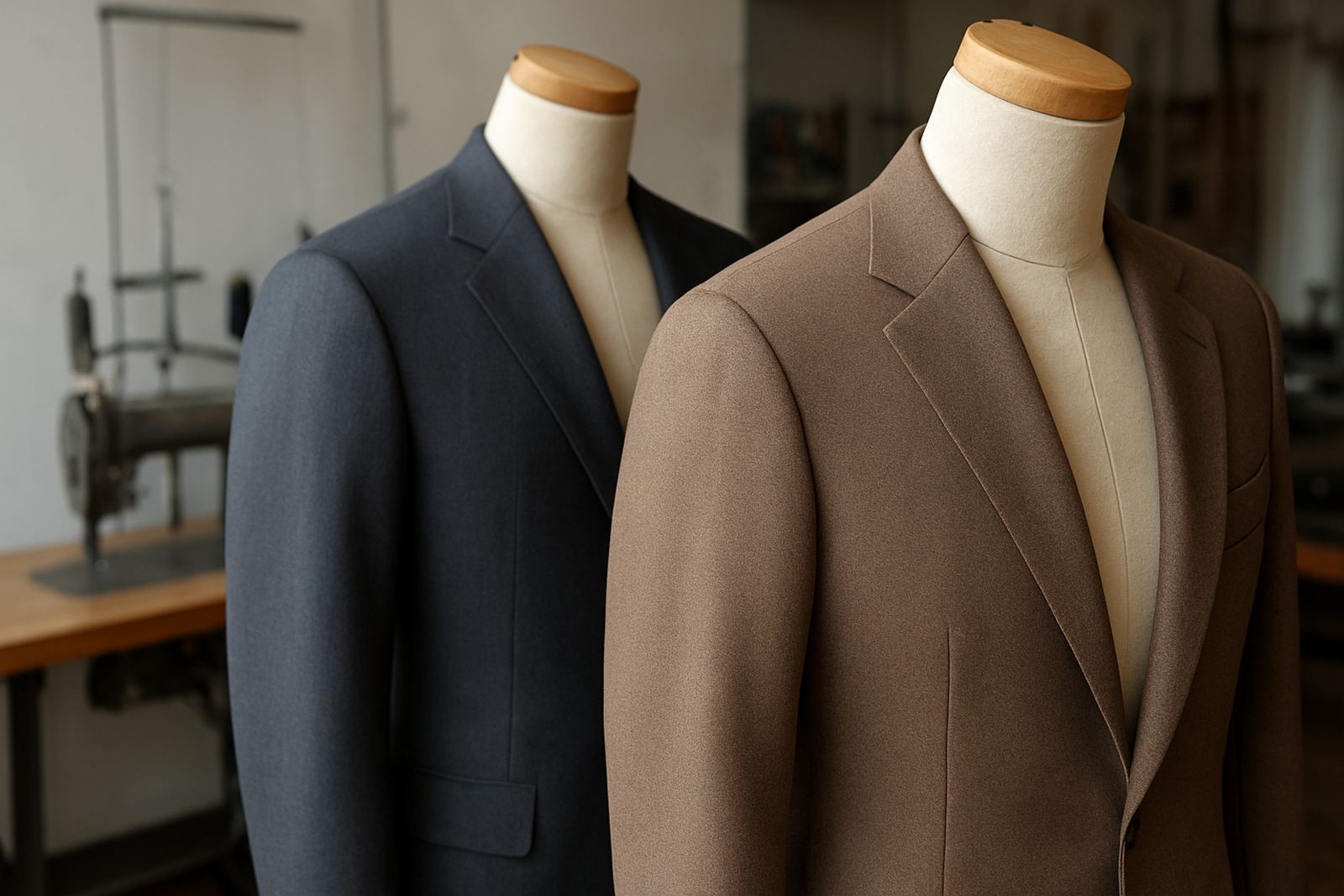
When a jacket is too short, it can make the body look top heavy and leave the hips exposed in an awkward way. Too long, and the legs can appear shorter while the jacket starts to feel bulky, especially on slimmer builds. The right length creates a clean line from shoulder to hem and helps the suit sit naturally from every angle.
In South African tailoring, we often work with clients who need a jacket that looks smart in the office but still feels practical in heat, traffic and long days between Sandton, Rosebank and Pretoria. A well judged length helps with that. It keeps the shape neat without making the coat feel stiff or fussy, and it gives enough coverage for sitting, walking and standing through a full day.
As a simple guide, most jackets should cover the seat at the back and fall around the middle of the hand when the arms are relaxed. That is not a hard rule for every body shape, but it is a strong starting point for balance.
How body proportions affect the right finish
Jacket length should work with the wearer’s height, leg length, torso depth and shoulder width. A taller man can usually carry a slightly longer jacket, while a shorter frame often benefits from a cleaner, slightly shorter cut to keep the body from looking compressed. The aim is not to follow one fixed measurement for everyone, because one size never suits everyone, not even close.
We also look at where the body carries weight. A fuller midsection may need a jacket that skims the body rather than clings, with enough length to keep the line smooth. A slimmer client might want a neater taper and a jacket that does not hang too far below the seat. The best result comes from balance, not from chasing fashion alone.
- Shorter jackets can suit slimmer or shorter frames if the rest of the cut stays clean.
- Longer jackets often work better for taller men and for formal business wear.
- People with longer torsos usually need a little extra length so the jacket does not ride up.
- If the jacket pulls across the hips when buttoned, the length or stance may need adjusting.
The seat line, movement and real-world wear
A jacket is not only judged while standing still. It has to move when you get into a car, reach for a seat, shake hands or lean over a table. In Johannesburg traffic, that matters. A jacket that is cut too short may ride up badly when seated, while one that is too long may bunch under the back when you drive from Midrand to Rosebank or spend time in meetings in Sandton.
The seat line is the point where the jacket should feel secure without dragging. If the back hem sits too high, the jacket can flare awkwardly over the hips. If it sits too low, the jacket may look heavy and reduce mobility. A good fitting session checks all of this by having the client move, sit and stand several times, not just pose in front of a mirror.
For clients who travel between Durban, Cape Town and Johannesburg, movement matters even more. Different climates affect how often a jacket gets worn, and coastal humidity can make a heavier cut feel uncomfortable. A practical length helps the garment work across seasons and settings.
Matching jacket length to shirt and trouser balance
Length works together with the rest of the outfit. A jacket with the right hem can make a shirt show only the correct amount at the cuff and collar, while the trousers keep the lower half of the look grounded. If the jacket is too short, the shirt and trouser proportions can feel chopped up. If it is too long, the trousers may seem lost underneath it.
This is why we look at the full outfit, not just one garment. A wedding suit in Cape Town may need a slightly different balance from a business suit for Pretoria or a corporate wardrobe for a client in Sandton. The exact length depends on lapel style, button stance, shoulder pitch and the client’s preferred look. There is no point forcing a trendy shape if it does not suit the rest of the cut.
- Higher button stances can make a jacket look shorter, even when the hem is correct.
- Longer lapels can visually stretch the torso.
- Neat trouser rise helps the jacket appear better balanced at the waist.
- Shirt cuff showing about 1 to 1.5 cm keeps the upper line tidy.
A fitting example from Rosebank to the coast
Take a client who comes into our Rosebank studio for a navy suit ahead of a family wedding in Durban. He is average height with a broad chest and spends most weekdays in corporate settings. He wants something elegant, but not stiff. If the jacket is cut too short, it may look sharp for photographs but feel wrong when he sits through the reception. Too long and it can overpower the frame in pictures and in person.
For that client, we would check where the hem lands against the hand, how the jacket falls over the seat and how it sits when the arms are forward. We would also consider the fabric weight because a lighter cloth may hang differently in humid Durban than in dry Johannesburg. Small changes in length of just a few millimetres can shift the whole impression, so the adjustment must be done carefully.
The same thinking applies to repeat orders and wedding tailoring across South Africa. A good jacket length is not about one rule for everyone, it is about the right proportion for that body, that fabric and that occasion.
What to check before approving the final length
Before a jacket is approved, the wearer should look at it in full length from the front, side and back. The eyes need to check more than the mirror at chest level because the hem line is where proportion either works or falls apart. Sit, stand, put the hands in the pockets if the cut allows it, and look again.
We keep the conversation practical from the start. The goal is to make sure the jacket gives confidence without drawing attention for the wrong reasons. A measured approach is usually best, especially for clients ordering online and receiving their garment by courier anywhere in South Africa. That way the fitting decisions stay consistent from first measure to final handover.
- Check that the hem is even and not lifting at the front.
- Make sure the back covers enough of the seat for your preferred level of formality.
- Confirm the jacket does not pull open when buttoned.
- Test movement in a seated position before signing off.
- Ask how the length works with the shoes you wear most often.
Good jacket length is one of those details that may seem small but changes the whole look. Get it right and the suit feels calm, balanced and easy to wear. Get it wrong, and everything else has to work harder.