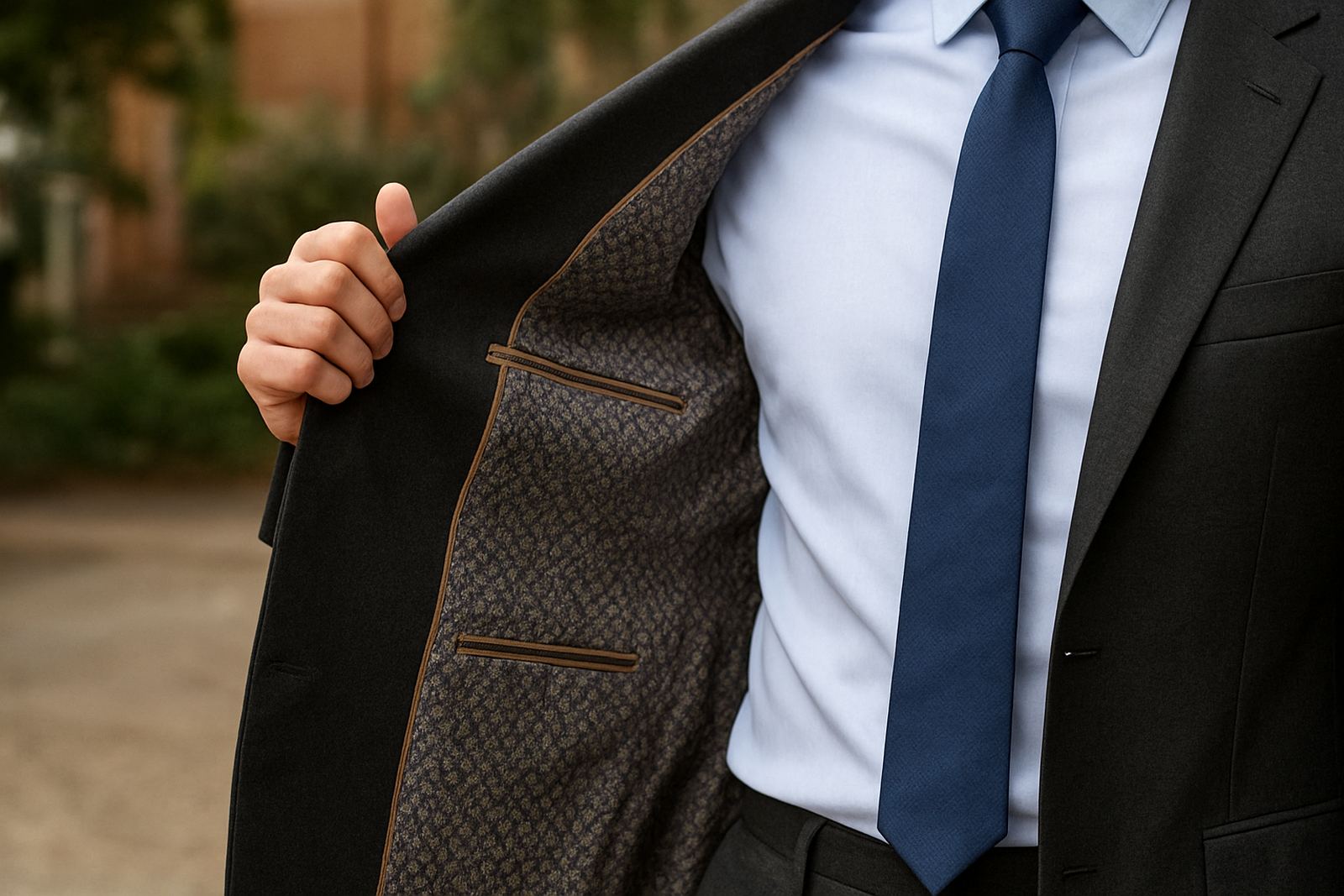
Why suit lining matters more than most people think
A suit lining sits between the outer fabric and your shirt, and it plays a bigger role than many clients expect. It helps the jacket glide over the body, supports the shape through the chest and shoulders, and reduces friction where the suit moves most during the day.
For Johannesburg clients, where mornings can be cool and afternoons heat up quickly, lining choice affects comfort from one meeting to the next. A heavier lining can make a suit feel too warm indoors, while a lighter option can keep the jacket more wearable for long office days, travel or weddings.
Full lining for structure and a cleaner finish
Full lining means the jacket is lined through most or all of the interior. This is the most traditional approach and is often preferred for formal suits, corporate wear and garments that need a stronger drape. It gives the jacket a smoother inside finish and helps the outer cloth keep its line over time.
- Good for cooler cities and airconditioned offices
- Useful for business suits and wedding suits
- Helps heavier fabrics hang neatly
- Often preferred when the jacket needs extra body
If you are ordering a suit for Sandton boardrooms or a winter event in Pretoria, full lining can be the practical choice. It adds warmth, so it is not always the first pick for humid coastal weather.
Half lining for warmer days and more breathability
Half lining covers key areas like the shoulders, upper back and sleeves, while leaving the lower body of the jacket lighter. This option works well for clients who want less heat build up without losing too much structure. It is a sensible middle ground for South African conditions.
Half lined suits are often chosen for daytime functions, summer events and clients who wear a suit through travel or long commutes. In places like Durban, where humidity can make a jacket feel heavy by lunchtime, this style can make a proper diffrence.
- Lighter feeling on the body
- Better airflow than full lining
- Still keeps shape in the shoulders and sleeves
- Well suited to warm weather and indoor-outdoor events
Unlined jackets for relaxed wear and hot climates
Unlined jackets have very little internal covering, sometimes only a small amount for the sleeves or key seams. They feel lighter and softer, and they are often used for less formal suits, summer tailoring or jackets made for frequent wear in warm weather.
This option is not ideal for every client. Because there is less internal support, the tailoring must be exact and the outer fabric needs to be chosen carefully. A well cut unlined jacket can still look smart, but it is usually better for a more relaxed dress code than for strict corporate use.
- Best for warmer climates and summer months
- Good for travel and casual tailoring
- Needs careful fabric selection
- Less formal than a fully lined jacket
Choosing the right lining for your fabric and use
The lining should work with the cloth, not fight it. A heavier wool suit for winter usually benefits from more lining, while a lighter summer weave can be too warm if it is over lined. The lining also needs to suit how the jacket will be worn, whether for daily office use, a wedding, or repeated client meetings.
We look at these points when advising on lining:
- How often the suit will be worn
- Whether it is for business, travel or formal events
- The weight of the outer fabric
- The city and season it will be worn in
- How much warmth or airflow the client wants
A client in Cape Town may want a cooler, lighter finish for summer functions, while someone in Johannesburg may prefer more body for a suit worn through the colder months. The right choice depends on real use, not just appearance.
Lining colours, feel and the small details that matter
Lining is also a place to make a suit feel more personal. Neutral shades are common because they look smart and stay practical, but subtle colour choices can add interest inside the jacket without changing the outward formality. The feel of the lining matters too, especially at the sleeves where your shirt moves against the jacket all day.
We normally guide clients toward lining that suits their fabric and purpose rather than choosing by colour alone. A smooth inner finish is important for ease of movement, and the right lining can help a suit feel better on the second, third and tenth wear, not just on collection day.
How we guide clients through lining choices at fitting
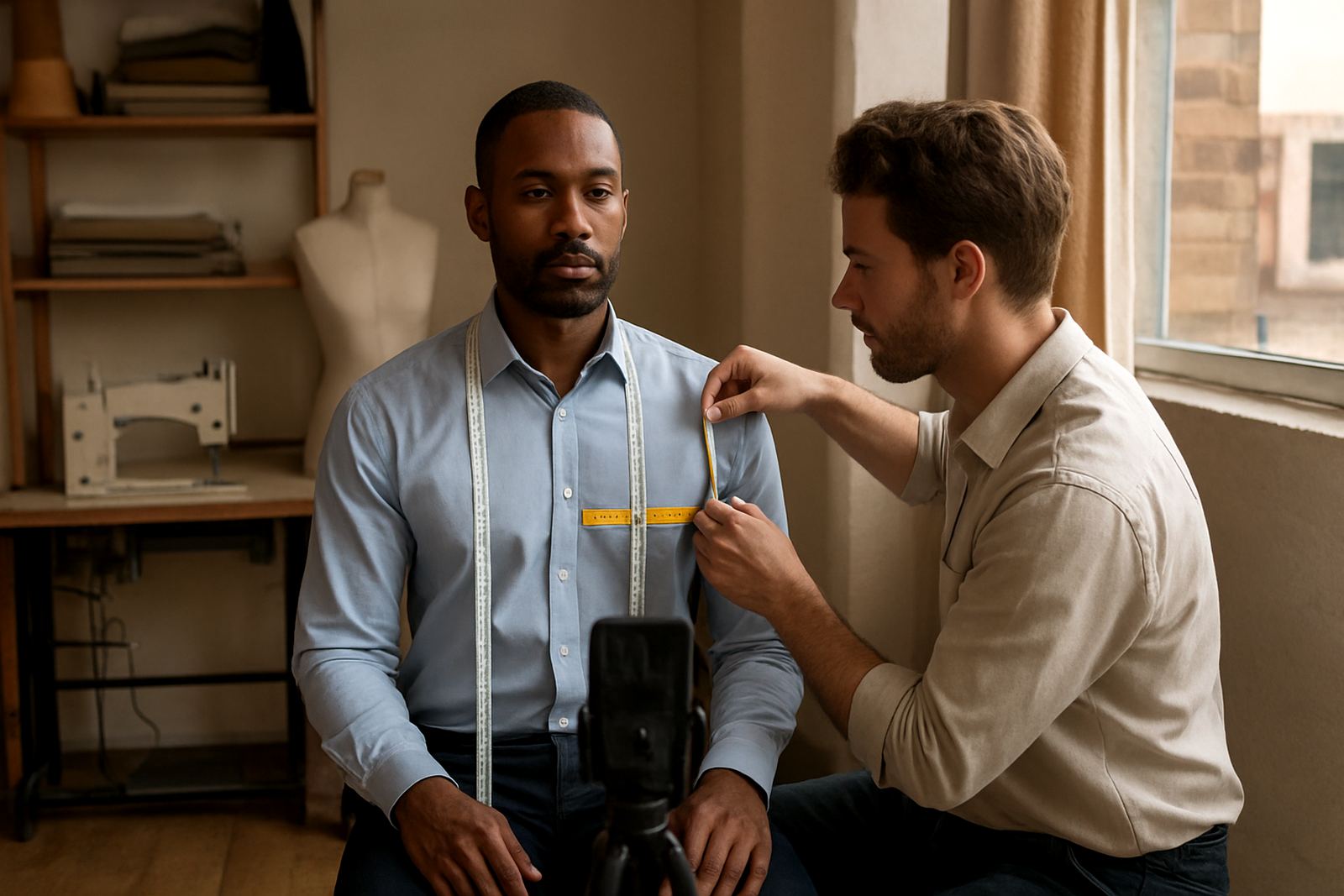
At fitting stage, we look at the garment as a whole. That means the cut, the cloth, the lining and the intended use. A wedding suit may need more structure than a summer business jacket. A repeat client ordering another suit may want the same lining weight as before, or they may choose something lighter after wearing the first suit through a hot season.
For Rosebank clients coming into the studio, and for clients across South Africa using our online fitting process, the aim is the same: choose a lining that makes the suit work in real life. A well chosen lining keeps the jacket comfortable, helps it sit better and makes it more useful in our varied weather.
That is often the difference between a suit that gets worn often and one that stays in the cupboard.