Start with the collar and neck size
The collar is the first place to check because if the neck is wrong, the rest of the shirt will feel off. A good fit leaves enough room to button the top closure without strain, with space for one finger, sometimes a little more if you prefer a softer feel. It should not choke when you turn your head, and it should not sit so loose that the collar gaps open at the throat.
For business wear in Johannesburg, a neat collar helps the shirt sit properly under a jacket, while a slightly easier neck can suit warmer days in Durban or Cape Town. If you wear a tie often, the collar points should sit flat and even. If you go open-neck, the collar must still hold its shape through the day.
- Button the top closure and breathe normally.
- Turn your head left and right to test movement.
- Check for gaping, pinching, or a collar that rides up at the back.
Check the chest and shoulder line
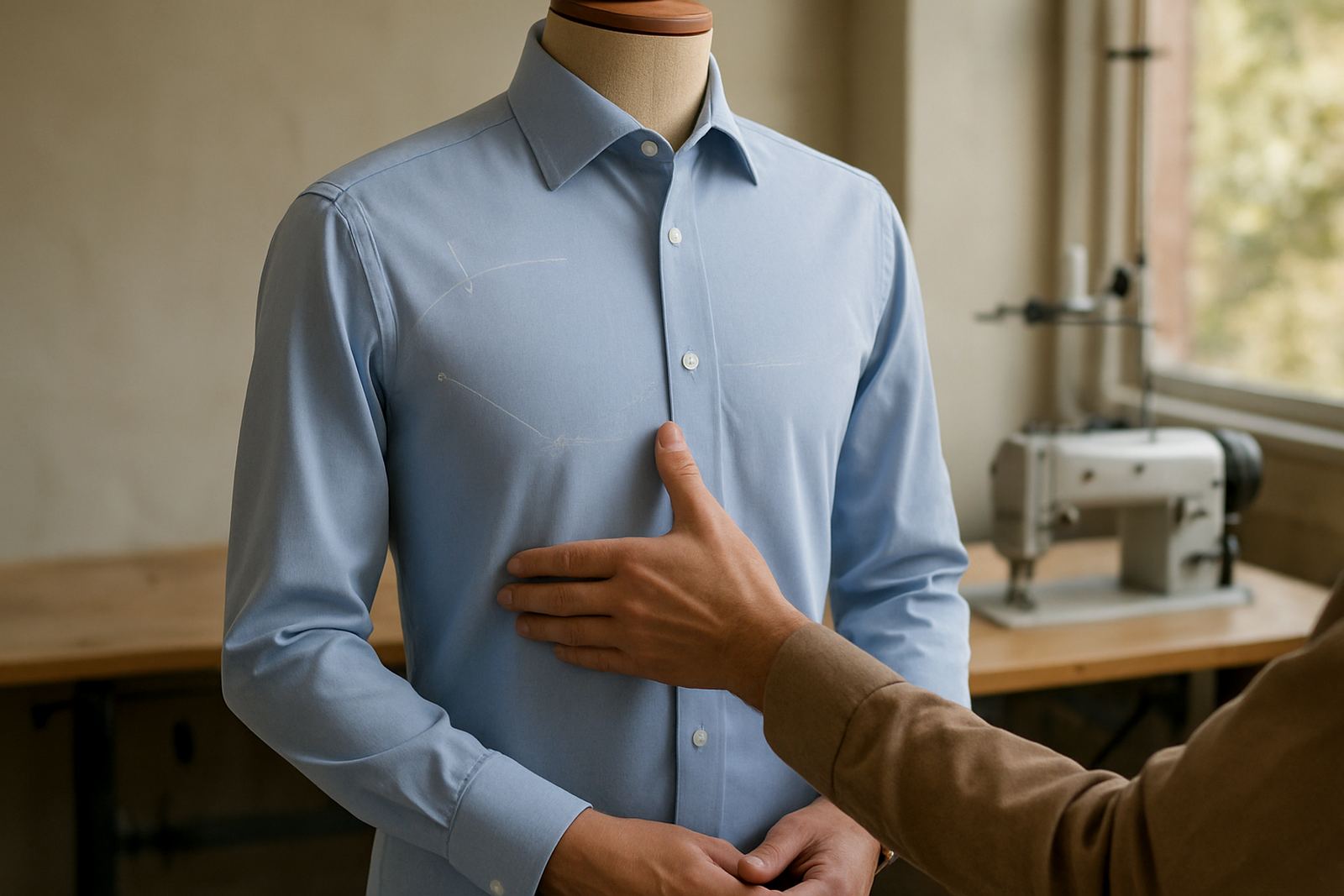
The shirt should follow the line of your body across the chest without pulling between the buttons. Small diagonal stress marks are usually a sign that the shirt is too tight through the front, especially if you move your arms forward or sit at a steering wheel. If the chest is too loose, the front panels can billow and the shirt loses shape.
The shoulder seam should sit close to the edge of your shoulder, not hanging down the arm and not digging in at the top. A correct shoulder fit gives the shirt balance, and it is one of the easiest things to get right in a made-to-measure piece. On custom shirts, the cutter can adjust the slope and width so the shirt sits better across your frame, which is useful if one shoulder sits higher than the other.
- Raise both arms and see if the shirt pulls across the back or chest.
- Look for button strain at the centre front.
- Check that the shoulder seam ends at the shoulder point.
How the waist should shape the shirt
A shirt does not need to cling at the waist, but it should not hang like a box either. The middle section should skim the body and allow a straight hang from chest to hem. Too much fabric creates bunching at the sides, while too little fabric makes sitting and bending awkward. For many South African clients, a slightly shaped waist gives the cleanest finish under a jacket or on its own.
If you carry more fullness around the middle, the shirt can still be refined without feeling tight. The aim is comfort and a neat line through the front and side seams. For clients who want a relaxed office fit, the waist can be eased a touch more. For a sharper silhouette, it can be brought in with care, not squeezed.
- Pinch the fabric at the waist and judge how much excess or tension is there.
- Sit down and check whether the shirt rides up badly.
- Make sure the hem stays smooth and does not twist around the body.
Sleeve length and arm movement
Sleeve length matters more than many people think. A correct sleeve should reach the wrist bone when your arms are relaxed, then show a little cuff if the shirt is made for formal wear. If the sleeve is too short, it can look unfinished. If it is too long, the cuff swallows the hand and gets in the way during work.
Good sleeve fit is about movement as much as length. You should be able to drive, lift a laptop bag, or reach across a counter without the sleeve pulling hard from the shoulder. In summer, a sleeve that sits right also helps with airflow under the arm, which is useful in humid weather on the coast. Small fitting changes can make a big difference here, and a little extra ease is often worth it.
If the cuff sits where the wrist bends, the shirt will wear better day to day. It should not bunch heavily at the elbow or feel tight through the upper arm. That is where a proper fitting process really earns its keep, because arm shape varies more than people expect.
Cuff fit, wrist space and closure comfort
The cuff should close comfortably around the wrist with enough room for a watch if you wear one. It must not pinch when fastened, but it also should not slide over the hand unless that is part of the cut. A neat cuff gives the shirt structure and keeps the sleeve behaving properly when you move.
For formal shirts, the cuff usually sits just below the jacket sleeve and shows a controlled amount of edge. For everyday wear, the cuff can be slightly easier, especially if you spend long hours at a computer or in meetings. If you notice red marks after wearing the shirt, the cuff size is too small. If it spins around the wrist, there is too much room.
- Fasten the cuff and see if one finger fits comfortably inside.
- Check watch clearance on the dominant wrist.
- Move your hand up and down to test pressure at the wrist bone.
A simple fitting checklist before you order
Before placing an order, use a clear fitting checklist so the shirt is measured against how you actually dress and move. Bring the shirt type you wear most often, whether that is office wear, wedding wear, or a more relaxed style for travel and weekends. The best fit depends on how the shirt will be used, not only on measurements on paper.
Online and studio fittings let us refine the details that matter most: neck, chest, waist, sleeve and cuff. If you are ordering from Sandton, Pretoria, Midrand or further afield, it helps to note where the shirt will be worn and how fitted you like it. That way the final piece can be cut for your routine, not some generic idea of size.
- Decide whether you want a classic, regular or more shaped fit.
- Note any shoulder difference, posture issue, or long arms.
- Check collar comfort, chest ease, waist shape, sleeve length and cuff room.
- Think about climate, jacket wear, and how often you sit or travel.
When a shirt needs refinement
Even a good shirt may need small adjustments after a first wear. If the collar feels right but the sleeve twists, or if the chest fits yet the waist feels too full, those are useful signs for refinement. A shirt should feel better after an adjustment, not more restrictive. That is the point of made-to-measure work.
Keep an eye out for button strain, collar gaps, sleeve drag, or a hem that rides up badly when seated. Those issues can usually be corrected with careful alteration or a revised cut on the next order. For repeat clients, the fit record becomes more accurate with each shirt, and the process gets easier, not harder. That saves time and avoids guesswork. It also means fewer surprises when the parcel arrives.
If you are fitting for work, a wedding, or a full shirt wardrobe, it is worth reviewing the shirt after a full day of wear rather than just trying it on in front of a mirror. Real use tells you far more.