
Start with the wedding date, then work backwards
The first step is simple: count back from the wedding date and set your fitting points early. For a made-to-measure suit or shirt, allow enough time for the first consultation, measurements, garment making, a fitting, and any refinement. If your wedding is in peak season, or guests are travelling in from Durban, Cape Town or out of town, book earlier than you think you need to. A practical window is 8 to 12 weeks before the day, with a little extra time if you are ordering for more than one person.
We recommend starting with the groom first, then the best man and groomsmen, and then any fathers or close family members who are also being outfitted. That makes it easier to keep the look consistent and avoids last minute colour or fabric changes that can throw off the order.
- Confirm the wedding date and venue first
- Decide who needs a full suit and who needs a shirt only
- Set one person to coordinate responses and approvals
- Plan for travel, work commitments and load-shedding disruptions if fittings are after hours
Choose the look before you choose the cloth
Before fabric selection, it helps to settle the overall direction. Think about the formality of the ceremony, the season, and the venue. A garden wedding in Pretoria in summer is different from a formal evening celebration in Johannesburg or a coastal event where humidity can affect how cloth wears. Your cloth, lining and finishing should suit the weather and the level of movement expected on the day.
Share any colour references early, including bridesmaid dresses, the bouquet palette, or the suit tones worn by the rest of the wedding party. If you want a classic look, keep the structure clean and use restrained details. If the celebration is more modern, small touches like contrast lining or a particular collar shape can give the outfit personality without making it hard to wear again later.
- Bring venue photos and colour references to the fitting
- Decide whether the groom should stand out from the rest of the party
- Ask about cloth weight for summer heat or winter layering
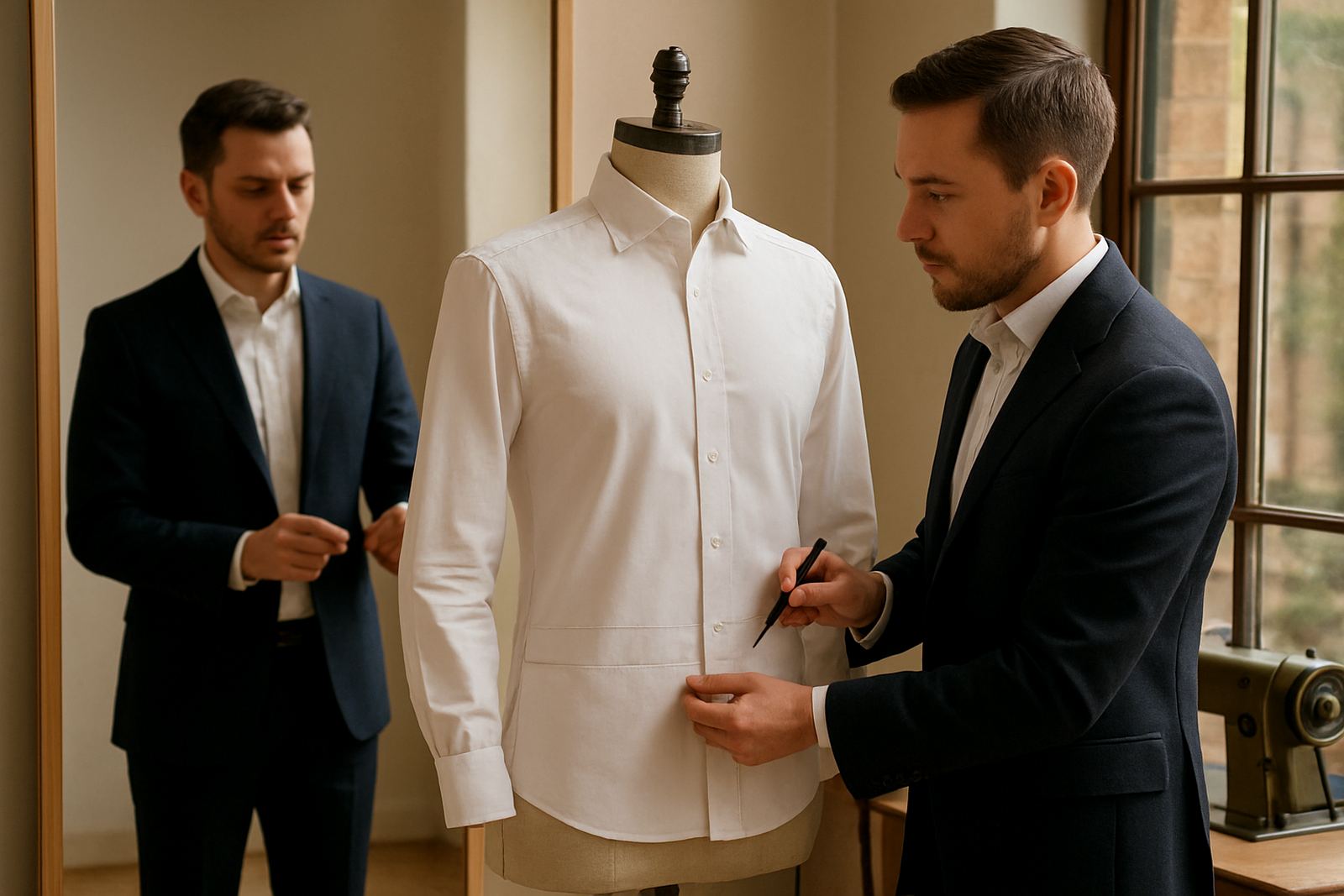
- Choose shirt options early, including collar style and cuff finish
Use the first fitting to settle measurements and style details
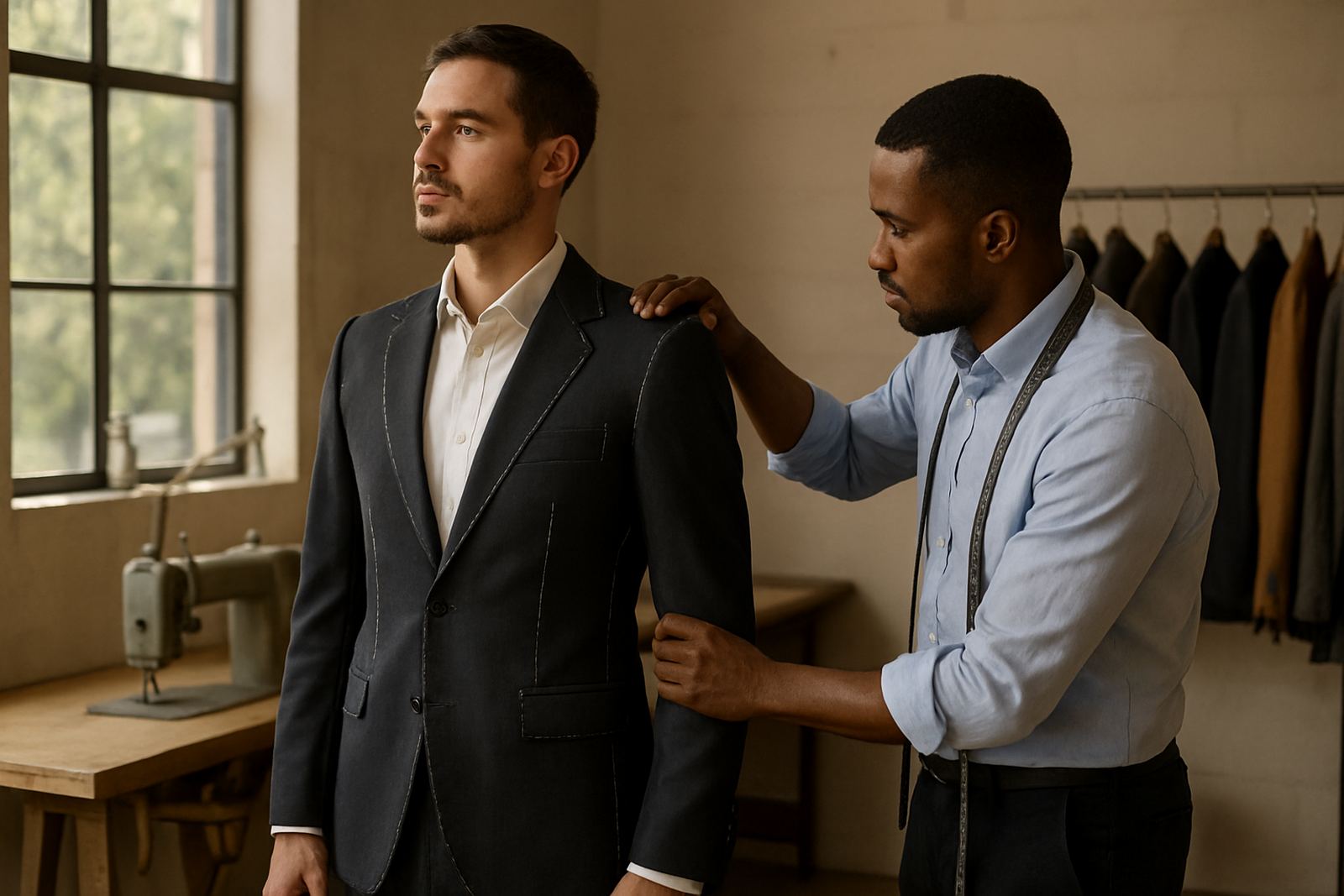
The first fitting is where the order becomes specific. Measurements are taken, posture and shoulder balance are checked, and the cut is planned around how the garment should sit in real life. If you are visiting the studio in Rosebank, bring the shoes you plan to wear on the day. Heel height changes jacket length, trouser break and overall balance, so it matters more than people think.
This is also the point to finalise details like lapel width, pocket style, trouser shape and whether the shirt should be slim or more relaxed through the body. A good wedding fit should allow you to breathe, sit, hug and move around for long hours without pulling at the shoulders or waist.
- Wear the right shoes or bring them along
- Bring underlayers if you plan to wear them on the wedding day
- Tell us about any shoulder, back or waist fit concerns
- Confirm sleeve length, jacket length and trouser finish
Build in time for refinement, not just one try-on
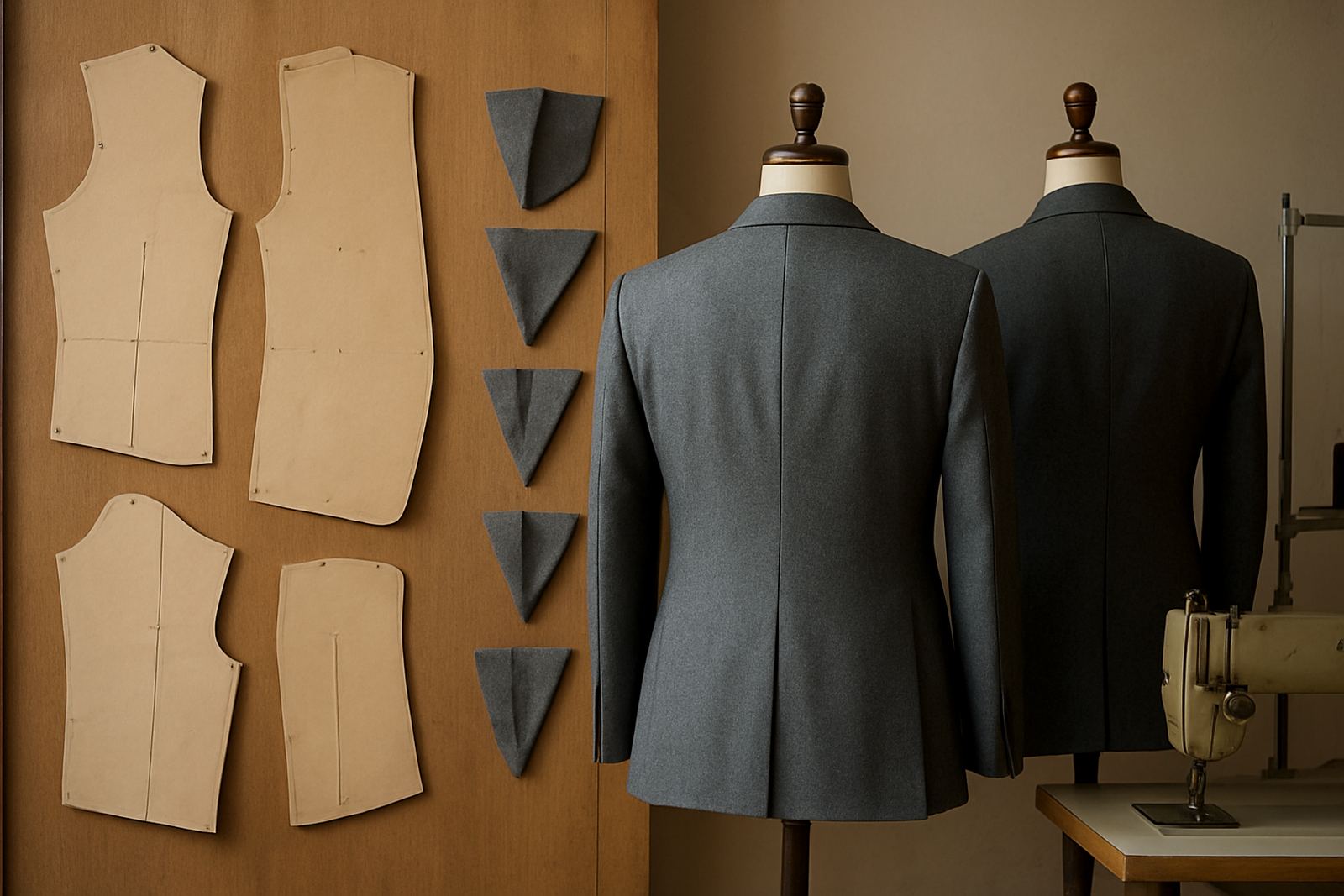
Wedding clothing usually needs at least one refinement fitting after the initial making stage. That gives time to check the balance, sleeve pitch, waist comfort and clean line of the trousers. Small changes can make a major difference, especially if body shape changes during the planning period or if the groom has a busy schedule and weight shifts a little in the final weeks.
If multiple people are being fitted, keep the process orderly. Do not leave approval until the final week. It is better to approve the main structure early and only leave fine details for later. If you are planning a destination wedding or need courier delivery nationwide, factor in a few extra days for transport and final checks.
- Allow time for at least one refinement fitting
- Keep approvals in writing through the enquiry process
- Do not change fabric or major styling after production has started
- Leave a buffer if the outfit must travel by courier
Coordinate the wedding party so the final look is consistent
For weddings with groomsmen, fathers or ring bearers, consistency matters. Decide early whether everyone will wear the same cloth and shirt or whether the groom will have subtle differences in trim, colour or cut. Matching does not need to mean identical. In many South African weddings, the groom stands apart through a slightly different lapel, a different waistcoat or a shirt detail that sits quietly under the jacket.
Keep the coordination practical. One person should manage measurements, payment timing and collection planning so nothing gets duplicated or missed. If people are ordering from different cities like Sandton, Midrand or Cape Town, use one clear schedule for responses and try-ons. That saves a lot of back-and-forth and helps avoid last minute stress.
- Nominate one coordinator for the wedding order
- List every person, their size details and their deadline
- Decide who needs a suit, waistcoat or shirt only
- Keep the colour palette and cloth type consistent across the group
Final week checks before collection or delivery
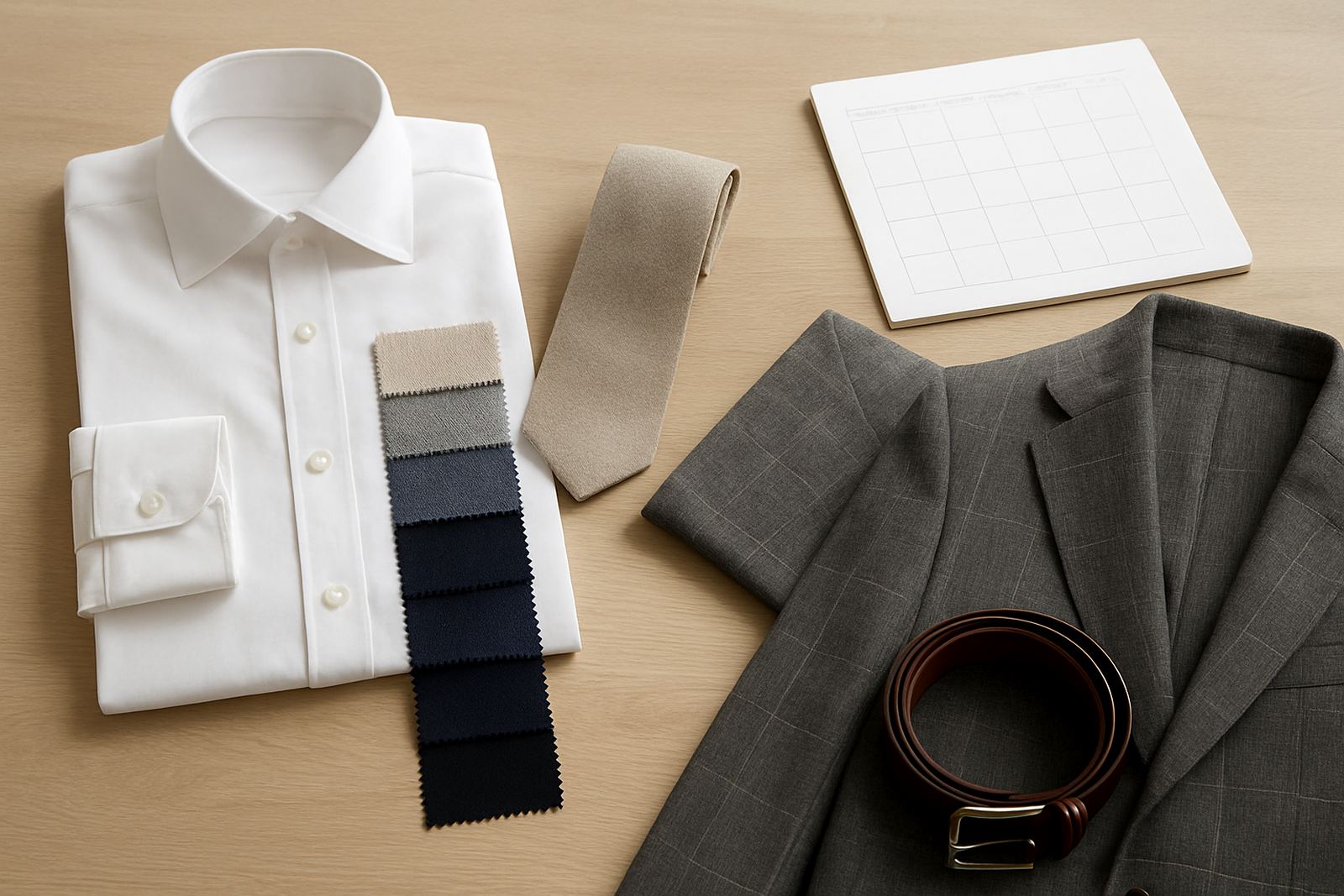
In the final week, focus on the practical details. Check that the shirt is pressed, the suit is ready, and every finishing point is correct. Try the full outfit together, including shoes, belt or braces, tie, pocket square and any accessories. If something feels tight now, do not leave it for the morning of the wedding. A small adjustment handled early is much easier than trying to solve it on the day.
For couples planning from across South Africa, make sure the collection or courier handover is confirmed well before departure. Keep the outfit stored properly, away from moisture and direct sun. If the wedding is near the coast, use a garment bag and hang the suit in a dry space so the cloth stays crisp. One final check on hems, buttons and stitching can prevent unnecessary panic.
- Try the full look together before the wedding week ends
- Check hems, buttons, collar shape and cuff length
- Store garments in a dry, clean place
- Keep a spare shirt, cuff links and any accessories with the outfit
What to prepare before you send your enquiry
When you contact us through the enquiry form, include the basics that help us plan correctly. The more accurate the information, the smoother the process. If you already know your wedding date, venue and how many people need garments, that gives us a clear starting point. It also helps to mention whether you want a shirt only order, a full suit, or a coordinated wedding set for several people.
Useful details include your preferred fitting method, any travel constraints, and whether the order is for the groom only or the whole party. If there are family members in Pretoria, Durban or elsewhere who need separate arrangements, mention that early so the timing can be set properly. A little planning now makes the final week far calmer.
- Wedding date and venue
- Number of garments required
- Preferred fitting method
- Colour references or style direction
- Any courier needs for out of town delivery