
Start with the way you work, not just the way you dress
A work shirt should match your routine. If you move between client meetings, a laptop, taxis or a car, and a full day in the office, you need a shirt that keeps its shape and does not feel heavy by 3pm. In Johannesburg that often means a shirt that copes with dry winter air and warm summer afternoons, while still looking neat under a jacket.
Think about your week before you think about trends. A person in a corporate role in Sandton may need a different shirt profile from someone who works in a studio in Rosebank or visits clients across Pretoria and Midrand. If you wear a tie most days, collar structure matters. If you often skip the jacket, the shoulder line and sleeve balance matter more.
We usually advise clients to build from the practical side first: office policy, climate, commute and how often the shirt will be worn before laundering. A shirt that works twice a week is not the same as one that is expected to handle four days of use, load-shedding delays and one quick refresh before the next morning.
Choose colour with your office routine in mind
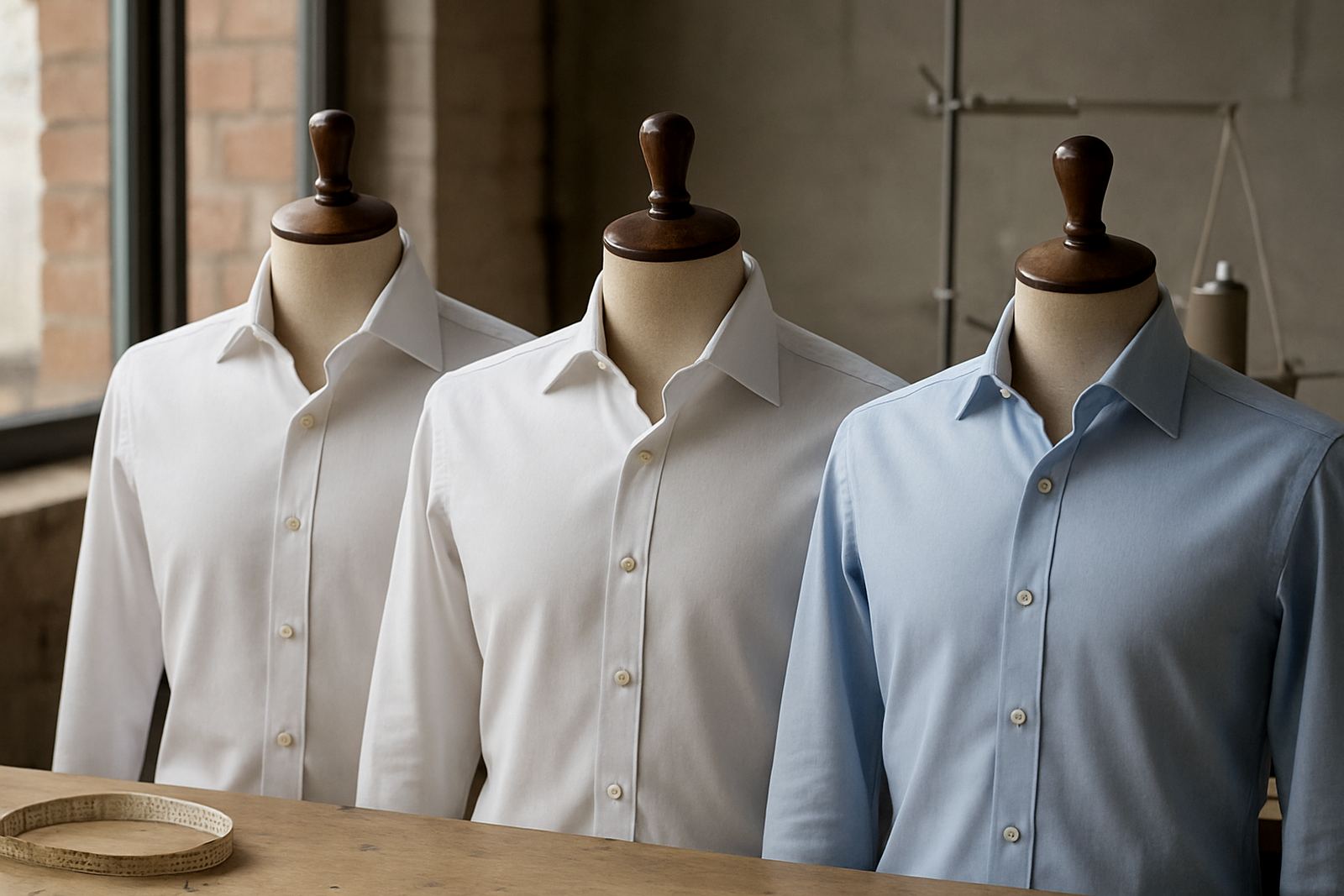
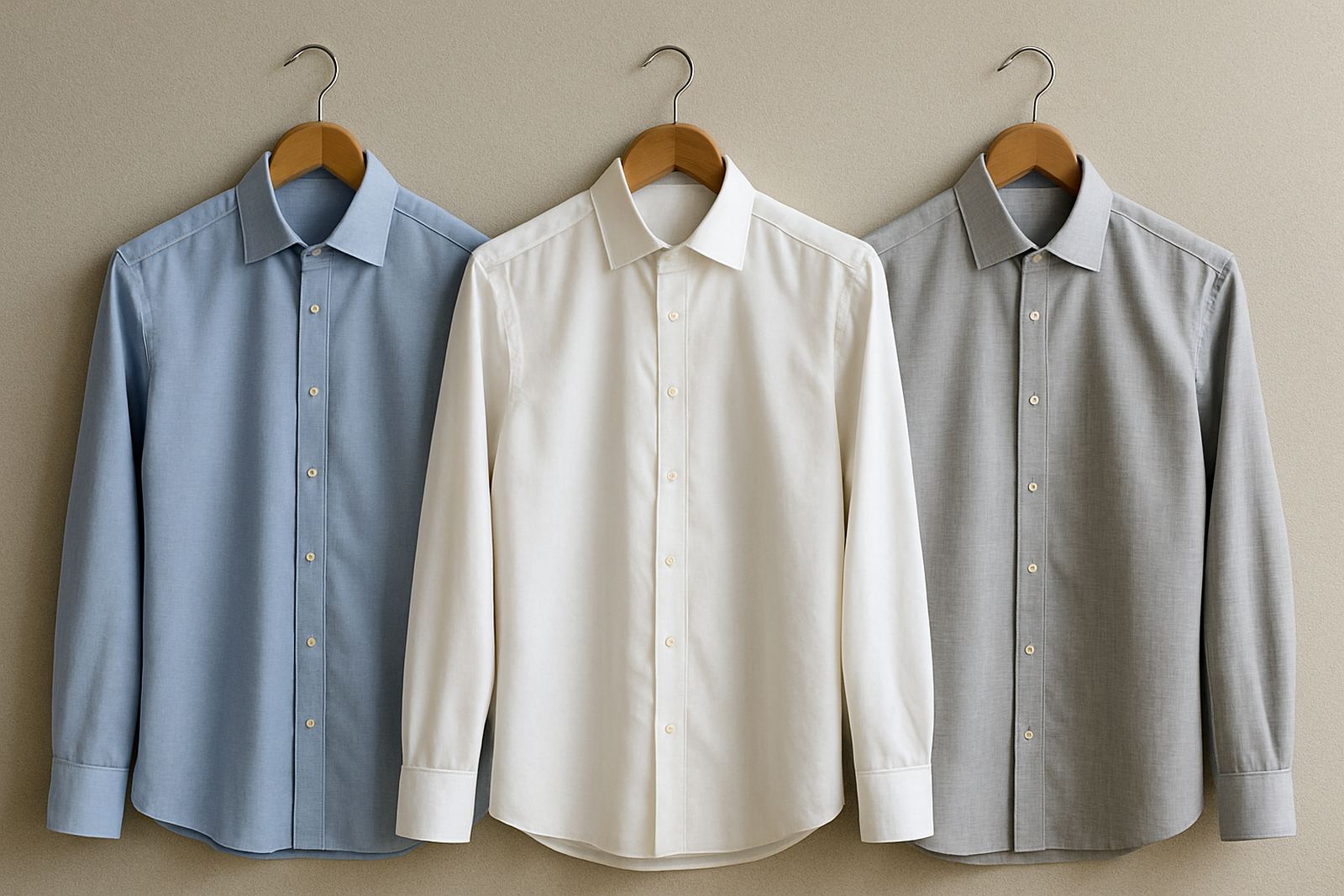
Colour is not only about style. It affects how formal the shirt feels, how often it can be worn and how forgiving it is when you are under fluorescent lights or in bright daylight. White is still the easiest choice for formal offices, interviews and presentations. Light blue is a strong everyday option because it works with navy, charcoal and grey trousers and is less stark than white.
For office use, soft tones usually give better value than fashion colours. Pale grey, fine stripe, muted blue or off-white can all sit well in a professional setting. If your office is relaxed, you can add deeper colours, but keep the base shirt palette easy to repeat. A shirt that matches several trousers gets worn more often and saves money over time.
- White: best for formal settings, interviews and boardroom days
- Light blue: easy everyday choice for most South African offices
- Soft grey or off-white: useful for a quieter look without going plain
- Fine stripe: good when you want texture without loud patterning
If you work in Durban or the coast, very dark colours can show salt marks and perspiration more quickly. In hotter areas, lighter shades often stay looking fresher for longer, even if the shirt itself is the same fabric weight.
Weave changes how the shirt feels at 8am and 5pm
Weave matters as much as colour. A smooth weave usually looks sharper and is easier to pair with formal tailoring. It can also feel slightly cooler against the skin, which helps in summer or when you are moving between the office and the car. A slightly more textured weave may hide wrinkles better and feel softer for long wear.
For most office use, a balanced fabric is the safest starting point. It should be breathable enough for a warm day, but not so thin that it clings or becomes see-through under strong indoor lighting. That is especially important if you travel between Johannesburg, Pretoria and the coast, where the weather can change quickly and aircon can make a room feel cooler than the street outside.
- Finer weave: cleaner appearance, better for formal office dressing
- Medium weave: practical for daily wear and easier maintenance
- Textured weave: hides minor creasing and works well for frequent wear
- Heavier weave: useful for cooler months, but may feel warm in summer
Also consider how the shirt behaves after ironing. Some fabrics look smart straight away but lose shape by lunchtime. Others hold a crease better and save time on busy mornings when there is a power cut, or when the ironing gets delayed because the schedule is tight.
Fit should let you sit, drive and reach without pulling
Office shirts are often judged when they are standing still, but you wear them while driving, sitting at a meeting table and reaching for files or a laptop bag. A good fit allows movement across the shoulders and back without excess cloth around the waist. The collar should sit comfortably, not press into the neck, and the cuff should finish cleanly at the wrist.
Made-to-measure is useful here because work shirts are rarely one-size-fits-all. Some clients have a stronger neck and narrow waist, others need more room in the shoulders or extra length for a taller frame. If the shirt is too loose, it starts looking untidy quickly. If it is too tight, you feel it every time you lift your arms.
Consistency matters when a client wants each new shirt to match the standard of the last one. That consistency matters if you want a work wardrobe that stays dependable. One good pattern can be repeated in several colours, which keeps dressing simple and saves decision time in the morning.
Match the collar and cuff to your actual office dress code
Collar style should fit the level of formality in your workplace. A structured collar suits a tie and gives a neater frame around the face. A softer collar can work well in more relaxed offices, especially when worn open neck. The same rule applies to cuffs. If you wear a jacket most days, the cuff should sit comfortably under the sleeve. If you do not wear a jacket, comfort and easy movement matter more.
The best shirt is the one you will actually wear often. Many office wardrobes look good in theory but fail in practice because the shirt needs constant fussing. Look for details that save time, not add it. A neat collar roll, balanced sleeve length and a straight hem can make a big difference in day-to-day use.
- Wear a tie often: choose a firmer collar that supports the knot
- Open-neck office: a softer collar can look less formal but still smart
- Under a jacket: keep cuffs and shoulders tidy for a clean line
- Long days at a screen: prioritise comfort around the neck and upper back
For many South African offices, the practical rule is simple: dress as formally as the most important meeting on your calendar, not the quietest hour of the day.
Build a small shirt rotation, not a crowded cupboard
A useful work wardrobe does not need dozens of shirts. It needs a rotation that covers the week. Start with two white shirts and two light blue shirts, then add one or two in subtle stripe or grey if your office allows it. That gives you enough variety to manage laundry, travel and last minute meetings without repeating the same look too often.
If you are ordering for a team or a client group, consistency matters even more. Corporate shirts should share the same collar shape, sleeve length and colour tone so the group looks coordinated in meetings and events. For wedding parties, launch days or client presentations, a matched shirt standard keeps everyone looking organised without being identical.
In Johannesburg, where workdays can begin cool and end warm, a shirt that layers well is worth more than a trendy one. Keep the fit clean, the colour useful and the fabric appropriate to your routine. That is the shirt that stays in service and does not spend half its life hanging in the cupboard.
A simple local example: from Rosebank to a client meeting in Sandton
Consider a consultant based in Rosebank who starts the day in studio, heads to Sandton for a client meeting and returns through traffic after dark. A light blue shirt in a medium weave, with a structured collar and enough room through the back, will usually perform better than a fashion-forward shirt that looks good for an hour and then needs constant adjusting. If the same person travels to Pretoria twice a week and sometimes works in Durban heat, breathability becomes even more important.
That is why we treat work shirts as tools, not just clothing. The best choice depends on where you work, how often you wear the shirt and what your day asks of you. Once those points are clear, colour and weave become easier to choose and the fit can be tuned properly.
For most office customers, the winning formula is practical: one dependable colour, one suitable weave and one cut that works when sitting, driving and standing through a full day. It sounds simple because it is, and it saves a lot of hassle later on.