Why the collar matters before the rest of the shirt does
Many people choose a shirt by colour or fabric first, then only think about the collar when the fitting is nearly done. That is usually backwards. The collar sits closest to the face, so it carries a lot of visual weight. A neat collar can make a shirt look sharper straight away, while the wrong one can make a good shirt feel slightly off, even if the shoulders and sleeves are correct.
In South Africa, the collar often has to work across different settings in one week. A Sandton client may want a shirt that works with a jacket on Monday, then stands alone on Friday for a dinner in Rosebank. A Durban client may need a collar that still sits properly in heat and humidity, while a Pretoria client may want something formal enough for meetings but comfortable under load-shedding pressure when the day runs long and the aircon stops. That is why collar choice is not a small detail.
How collar shape changes the look of your face
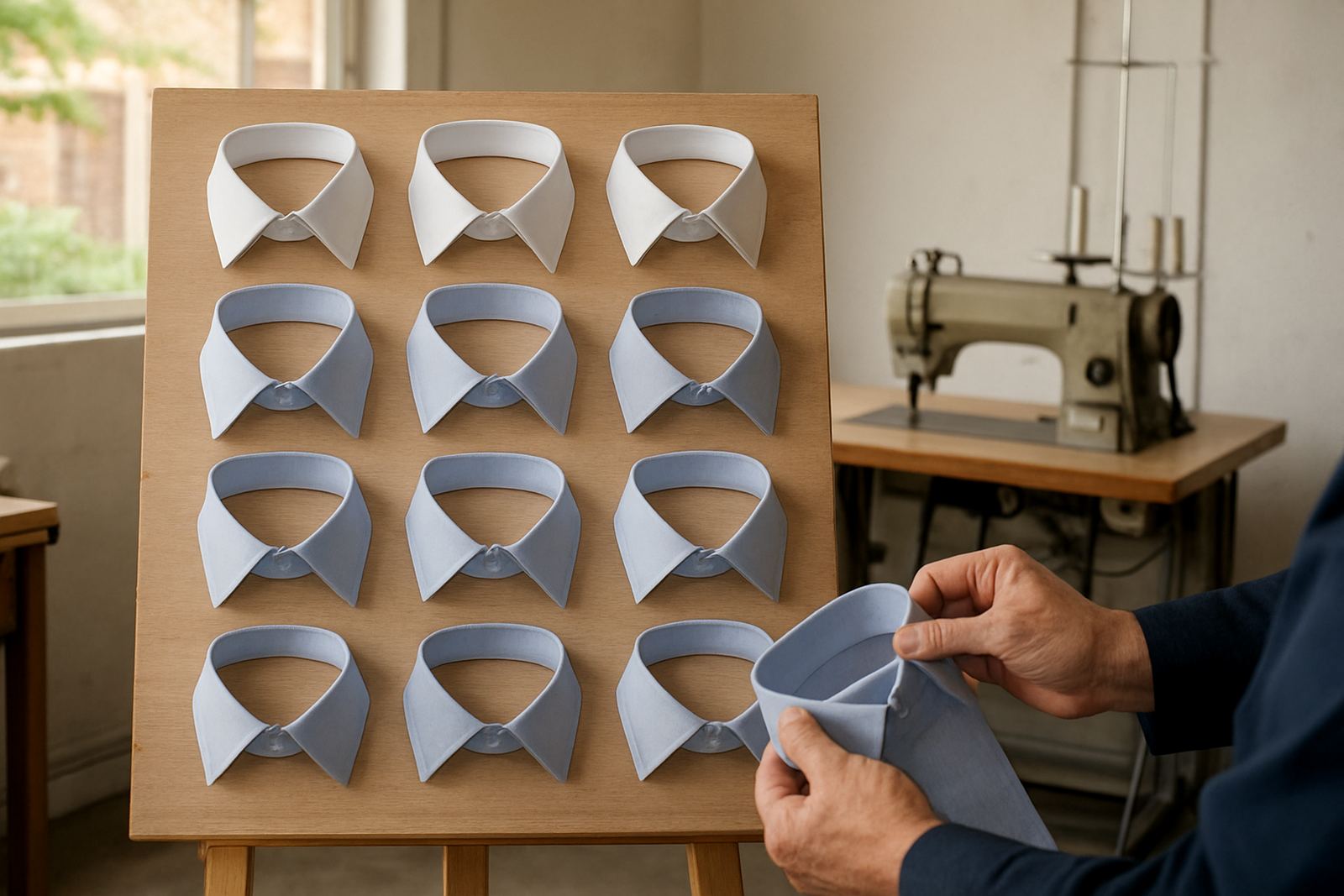
The main job of the collar is to frame the face. Different collar spreads and point lengths create different effects, and the best choice depends on your neck, face shape and how much room you want around a tie knot.
- Narrow point collars give a cleaner, more traditional look. They suit slimmer faces and can make a broader face feel slightly longer.
- Medium spread collars are a safe choice for most men. They balance well with open neck wear or a tie.
- Wide spread collars create a stronger frame and tend to suit fuller faces or people who prefer a more formal finish.
- Button-down collars feel more relaxed and are useful for smart casual dressing, though they are less formal for weddings or boardroom wear.
A good fitting session should look at the whole neckline, not just the collar stand. If the neck is short, a collar that sits too high can feel crowded. If the face is long and narrow, a very tight point collar can exaggerate that shape. The aim is balance, not perfect symmetry on paper.
Matching collar style to ties and knots
Tie choice matters more than many people expect. Some collars leave enough room for a fuller knot, while others work best with something neat and compact. If the collar points sit too close together, a large knot can push the collar out of shape. If the spread is too wide and the tie knot is too small, the result can look thin and unfinished.
For daily office wear, many clients do well with a medium spread collar and a standard knot. For weddings or formal functions, a wider collar often gives a cleaner frame under a jacket. If you rarely wear a tie, the collar still has to look tidy when open, especially on a shirt worn without a blazer.
- Use a narrower collar if you prefer small, neat tie knots.
- Choose a spread collar if you wear ties often and want a fuller knot.
- Avoid very large collar spreads on soft fabrics that lose shape quickly.
- Check that the top button closes comfortably without strain.
At our studio, we often adjust collar choice after seeing the tie habit of the client, not before. A person who wears ties only for funerals or formal functions will need something different from someone who wears one three times a week.
Formal shirts, business shirts and everyday shirts are not the same
There is no single collar that fits every shirt purpose. A shirt for court, a shirt for a wedding and a shirt for Friday trading meetings all need different levels of structure. The collar is one of the clearest signals of formality.
A crisp collar with a stronger stand tends to look more formal. It sits well under a jacket and keeps its shape through the day. A softer collar feels easier for casual dressing and can suit lighter cottons, especially in warmer places like Durban or coastal Cape Town where people often want less stiffness around the neck.
For corporate wardrobes, consistency is important. If a team is being fitted for repeated wear, the collars should be chosen so the shirts look uniform in meeting rooms and on site. That is why corporate orders often need a clear collar spec from the start, rather than a mix of styles that looks uneven later.
- Formal: crisp spread or classic pointed collars
- Business: medium spread collars that work with or without a tie
- Relaxed: button-down or softer collars for less formal dress codes
What to watch for during a fitting or measurement
The best collar is not only about style, it must also sit properly on the neck. If the collar is too loose, it shifts around and looks untidy. If it is too tight, it leaves marks and becomes uncomfortable by midday. This is especially important for long work days, weddings, or travel between Johannesburg and other cities by courier.
During a fitting, check these points carefully:
- The top button should close without effort, but not feel baggy.
- The collar should lie flat without lifting at the back.
- There should be enough room for a finger at the neck when buttoned.
- The collar points should sit evenly when the shirt is worn open.
- If wearing a tie, the knot should rest neatly under the collar without bulging.
Collars can also be refined after the first shirt if you know what worked and what did not. A client may think they want a wide collar, then realise a medium spread suits their face better and feels easier for daily use. That is normal and it is one reason repeat orders are valuable. Once the right collar is found, it becomes part of your personal pattern rather than a guess.
A practical collar choice for South African wardrobes
If you want one collar that covers most situations, a medium spread is often the most useful starting point. It works for many face shapes, suits a wide range of tie knots and stays appropriate for office wear, dinners and family events. It is not the only good option, but it is a practical one.
For a groom in Pretoria wanting something sharp for photographs, a wider collar may give a stronger finish. For a client in Cape Town who wears shirts open neck most days, a cleaner point collar may feel less busy. For someone in Randburg who needs a shirt that moves from meetings to evening functions, the answer may be a balanced collar with enough structure to keep its shape, but not so much that it feels stiff.
The real test is how the collar supports the way you live and dress. The best shirt collar should not draw attention by itself. It should quietly make the face look well framed, the tie sit properly and the whole shirt feel considered. That is what good tailoring does, even in small details like the neckline.