
What actually changes between single and double-breasted
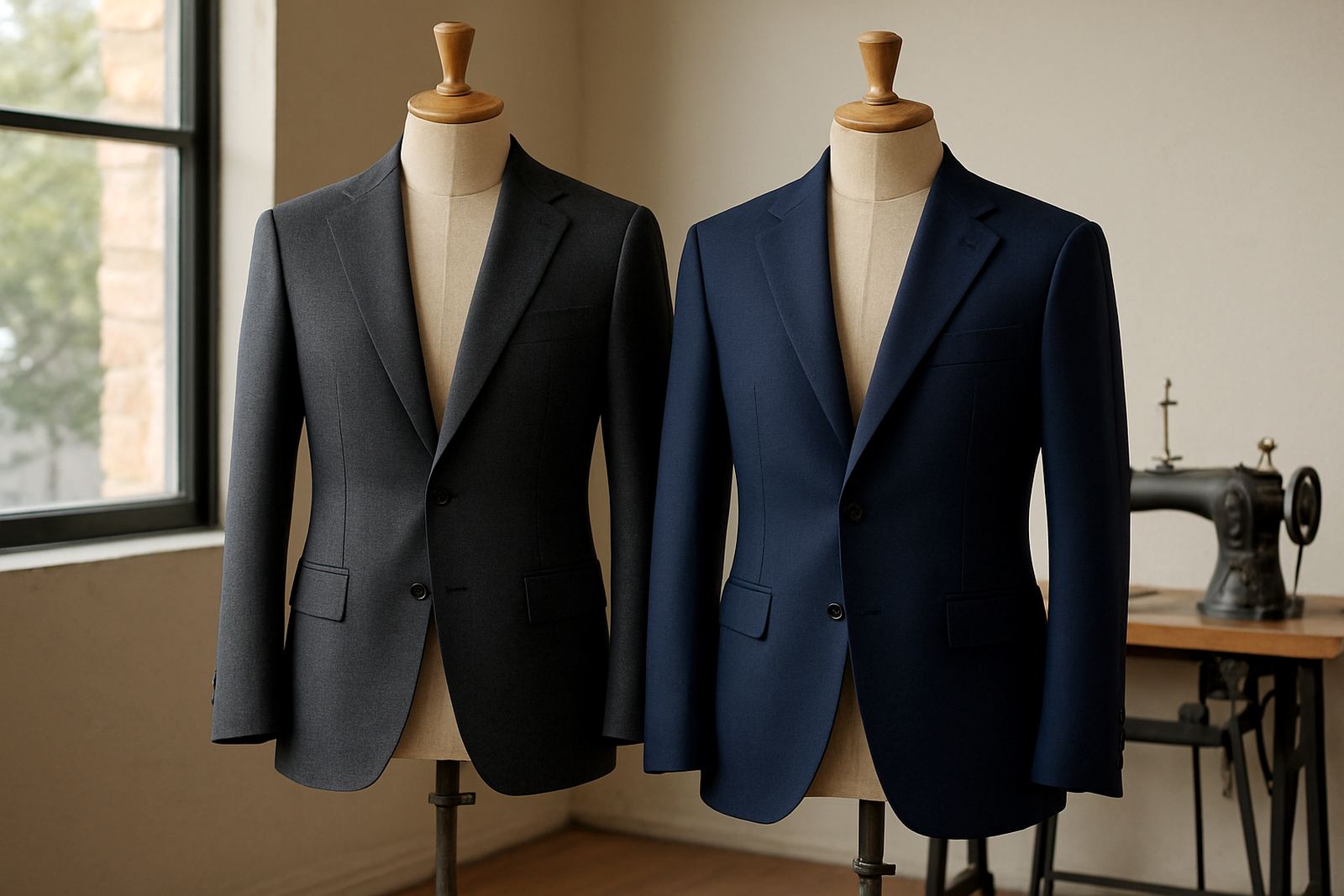
A single-breasted suit has one column of buttons and a front overlap that closes neatly across the torso. It is the version most South African men know well because it is easy to wear, easy to style and works for office days, weddings and formal dinners without much fuss.
A double-breasted suit has a wider front with two rows of buttons and more overlap through the chest. It reads as more structured and slightly more formal, with a stronger shoulder line and a jacket front that carries more visual weight. For some men that is exactly what they want, while for others it can feel too enclosed if the cut is not right.
The key point is this: neither style is better in general. The right choice depends on your height, build, posture and where the suit will be worn. In a made-to-measure setting, the same cloth can look completely different once the front style is matched to the body.
Best fit for slimmer frames and longer torsos
Men with slimmer builds often find that a single-breasted suit gives a cleaner line without adding bulk. It can lengthen the body visually, especially when the jacket is cut with a medium lapel and balanced button stance. If you are tall and lean, a single-breasted jacket often gives the most natural proportion.
A double-breasted jacket can also work well on a slim frame, but it must be handled carefully. Too much overlap or too much cloth through the chest can swallow a narrow torso. With the right cut however, a double-breasted suit can add presence and make the upper body look fuller in a controlled way.
- Choose single-breasted if you want a lengthening effect.
- Choose double-breasted if you want more visual structure through the chest.
- Avoid oversized lapels on a slim frame, they can overpower the body.
For clients in Sandton or Pretoria who wear suits for meetings, a single-breasted option often gives the most flexible result from Monday to Friday. It layers well over a shirt and can still work after hours without feeling too formal.
When broader shoulders and fuller chests need balance
Men with broader shoulders or a fuller chest often suit single-breasted jackets because the front remains less busy and the body line is easier to manage. A clean single row of buttons can create balance without adding extra width across the midsection.
That said, a double-breasted suit can be a very strong choice for a broad frame if the jacket is cut properly. The overlap should sit flat, the lapels should not pull, and the waist should still be shaped. If the jacket is too boxy it will look heavy, and if it is too tight it will pull across the front which is never a good look.
- Single-breasted suits help reduce visual bulk.
- Double-breasted suits can emphasise the chest, so the waist must be shaped correctly.
- Armhole height matters, because a low armhole makes any jacket feel sloppy.
In Johannesburg winter, especially when the air is dry and offices are cooled strongly, a well-cut single-breasted wool suit often stays comfortable all day. On the coast, where humidity can make cloth feel heavier, careful fabric selection becomes even more important.
Shorter men and men who want more height in the line
Shorter men usually benefit from a single-breasted suit because it creates a longer uninterrupted line from shoulder to hem. A jacket that ends at the right point on the seat and trousers with a clean break can make a noticeable difference without any gimmicks.
Double-breasted suits can still work for shorter men, but they need discipline in the cut. A low button stance or an overly long jacket can shorten the body visually. If the jacket is balanced correctly, though, a double-breasted suit can actually sharpen the silhouette and make the wearer look more upright.
We often advise shorter clients to keep the lapels medium in width and avoid excessive shoulder padding. The suit should support the frame, not fight it. That is true whether you are buying for a wedding in Cape Town or for regular office wear in Midrand.
Which style works better for weddings, work and formal events
Single-breasted suits are usually the safer choice for daily wear, interviews, corporate meetings and repeat use across different settings. They are easier to dress up or down with tie choice, pocket square placement and fabric weight.
Double-breasted suits make a stronger style statement and often suit events where you want to look more dressed up without trying too hard. They are popular for weddings, evening functions and formal photos because they carry structure and shape well under good lighting.
- For work: single-breasted is usually more practical.
- For weddings: either can work, but double-breasted gives more impact.
- For frequent wear in warmer weather: single-breasted is often easier.
A local example: a groom in Rosebank may choose a double-breasted jacket for the ceremony because it photographs cleanly, then a single-breasted navy suit for office use after the honeymoon. That kind of thinking gets better value from each garment.
Fabric weight, season and South African conditions matter
Suit style is not only about body type. Fabric weight and local conditions matter just as much. In Durban, where humidity can make heavier cloth feel close, a lighter wool blend or breathable lining can make a single-breasted suit much easier to wear. In Johannesburg, where winter mornings can be cold and indoor heating is common, a medium-weight cloth can hold its shape better through the day.
Double-breasted jackets often use more fabric across the front, so they can feel warmer. That is not a problem in a cool boardroom or winter wedding, but it may be too much for a long summer function. The fabric should suit the season, not just the style.
- Lightweight cloth works well for coastal cities and daytime events.
- Medium-weight cloth suits year-round wear in Gauteng.
- Heavy cloth is useful for winter, but can feel too warm indoors.
Load-shedding also affects how people dress. If you move between home, car and office with changing temperatures, a suit that breathes well and layers properly is usually more practical than one that only looks good in one room.
How we guide the choice during a fitting
The choice between single and double-breasted starts with the wearer, not the pattern. We look at shoulder slope, chest depth, waist shape, stance and how the client wants the suit to function. Then we match the jacket style to the person and the fabric to the use.
Some clients come in knowing exactly what they want. Others only know they want to look sharper for work, a wedding or a special event. That is where a proper fitting helps. A single-breasted suit may be the neatest answer for one client, while another may need the extra front structure of a double-breasted jacket to balance the frame better.
The final result should feel natural when you stand, sit and move. If the suit pulls, gaps or adds awkward width then the style is wrong or the cut needs refining. Good tailoring fixes that properly, and not with guesswork.